
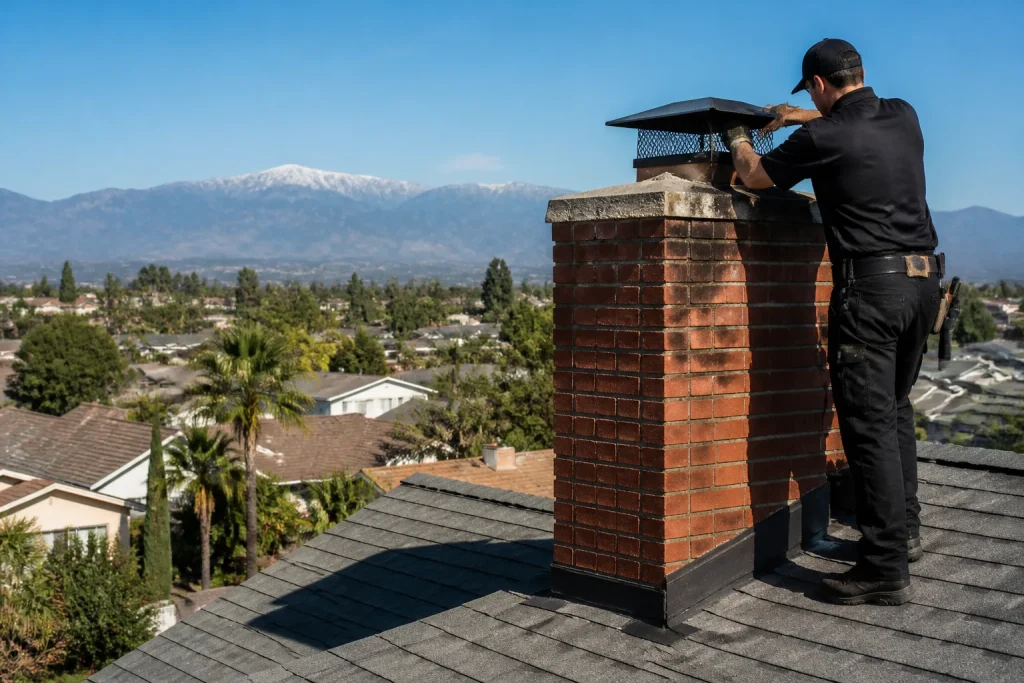
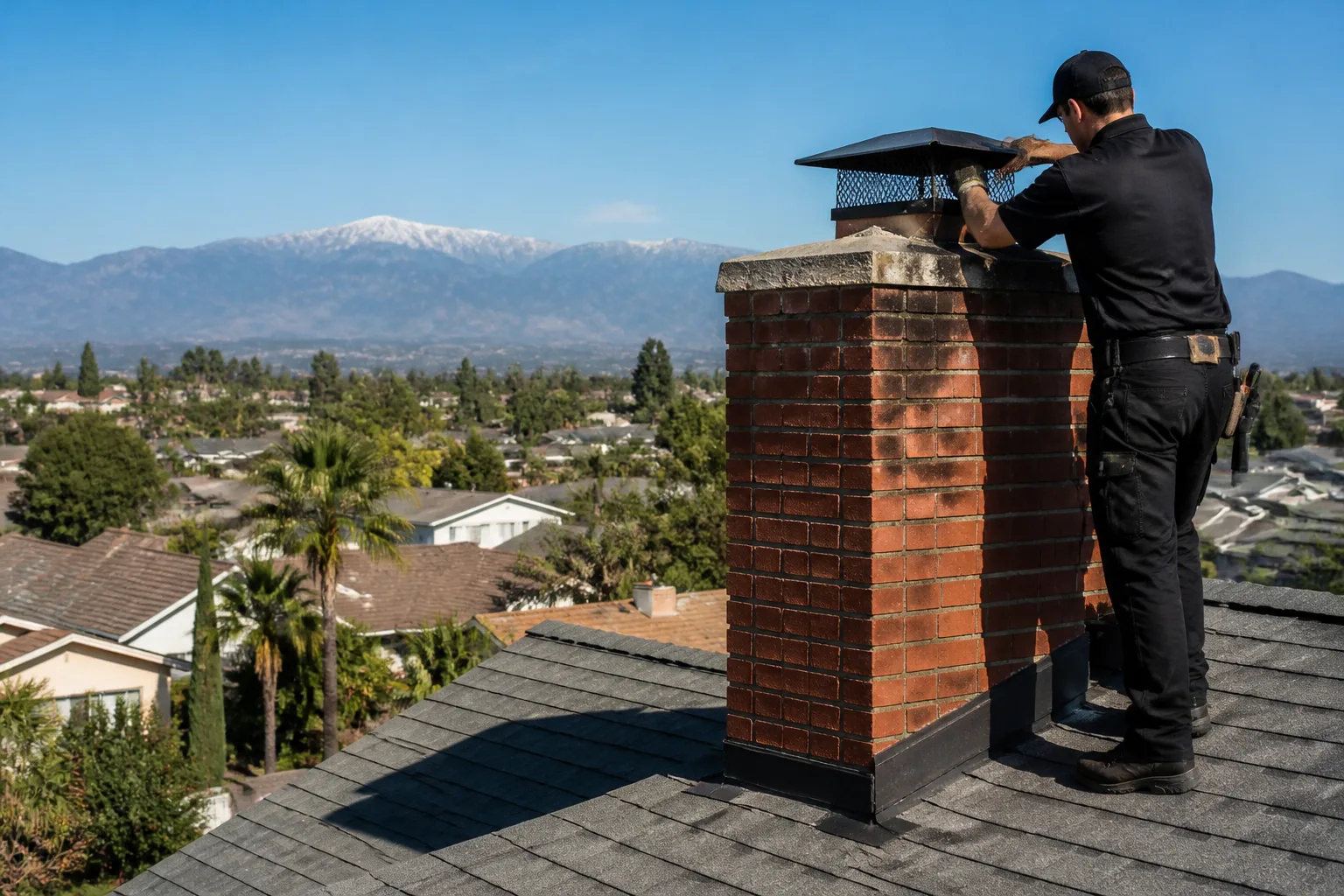
Emergency Chimney Sweep Near Me: What Fontana Homeowners Should Do First
When a chimney emergency hits, the first twenty minutes matter more than how fast a sweep crew can get to your Fontana home. A chimney fire often sounds like a low roar or a freight train rumbling through the walls, and the worst thing you can do is wait to see if it settles down on its own. Here’s the short version: close the damper if you can do so safely, get everyone out of the house, call 911 first, and only then start thinking about which chimney company to call for the repair and inspection that follows.
If you’re reading this before an emergency happens, good. You’ll know exactly what to do. And if you’re in the middle of one, get off this page and call 911. Come back after. We’ll still be here, and we’ll walk you through what comes next.
Not Every Chimney Emergency Is the Same: Know What You’re Dealing With
Fontana homeowners call us with three very different situations, and they all get lumped together as “emergency chimney sweep.” The response to each is not the same, so let us break them apart.
A chimney fire. This is the big one, and it’s what most people picture when they search “emergency chimney sweep near me.” Creosote, that black tar-like glaze that builds up inside a flue, catches fire. Temperatures inside the chimney can climb past 2,000 degrees Fahrenheit. You may hear a crackling or popping sound, or a low roar that sounds like a train. You may see flames shooting out the top of the chimney, or heavy black smoke. If you see or hear any of this, this is a 911 call. Not a chimney sweep call. Not yet.
A smoke backdraft event. This is the living room filling with smoke every time you light a fire, and it can happen suddenly even if your fireplace worked fine last season. In Fontana, we often see this after wind shifts or when a flue gets partially blocked by a bird’s nest or a fallen section of liner. A backdraft is not necessarily a fire emergency yet, but it’s a carbon monoxide risk and a sign that something upstream has changed. You should stop using the fireplace immediately, but you don’t need to evacuate or call the fire department unless the smoke is heavy or you smell gas.
A blockage emergency. Something is obstructing the flue, and you know it because smoke has nowhere to go. In Fontana, we’ve pulled out everything from raccoon nests to a tangle of rope left by a gutter crew. A blockage often announces itself with smoke backing up into the house on startup, or a strong, sharp smell coming from the fireplace even when it’s not lit. Like a backdraft, this is a stop-use situation, not necessarily a 911 one unless smoke is actively filling your home.
Knowing which of these you’re dealing with changes your first call. A chimney fire starts with 911. The other two start with a chimney professional. Which matters because confusing the order wastes time you don’t have.
The First 20 Minutes of a Suspected Chimney Fire
This is the part most online guides skip, and it’s the part that actually matters. Here’s the sequence, in order:
- Close the damper. If you can reach the damper handle without putting yourself near excessive heat or smoke, close it. This cuts the fire’s oxygen supply and slows it down. If there’s already fire in the firebox or surrounding area, do not attempt this. Just move on to step two.
- Evacuate everyone. Get every person and pet out of the house. Do not stop to collect belongings. Do not go hunting for the cat; the cat has already figured out something is wrong and is hiding in a spot you won’t find in a panic.
- Call 911 from outside. Tell the dispatcher you suspect a chimney fire and that it may have spread into the attic or walls. Five-alarm house fires in Fontana often start as chimney fires that burned undetected inside a wall cavity for hours.
- Do not use the fireplace again once the fire is out. Not the same night, not the next day. The fire department may tell you everything looks okay. They are not chimney inspectors. The liner can be cracked or collapsed even when the outside of the house shows zero damage.
One thing we want to emphasize: we are not the first call in an active fire. That’s the fire department. We’re the second call, the one that happens after the trucks leave and you need to know if your chimney is still safe to use. If you’re in Fontana and need that inspection, our chimney sweep service includes the Level 2 inspection most post-fire situations require.
Why ‘Emergency Chimney Sweep’ Means Different Things to Different Companies
Here’s a truth about the chimney trade that most homeowners never hear: the phrase “emergency chimney sweep near me” is used by a lot of companies as a marketing label, not an actual service promise. Some companies use “emergency” to mean they’ll pick up the phone after-hours and book you for a visit in the next day or two. Others use it to mean they’ll dispatch a technician that evening. In Fontana, those are two very different commitments.
When you call around after a suspected chimney fire or a sudden blockage, ask the company to be specific about what “emergency” means for them. Ask whether you’re booking an appointment for next week, for tomorrow, or whether someone can actually be there today. An inspection-only company will often say they can look at it next Tuesday, which may be fine for a slow leak but useless after a chimney fire. Ashwood Chimney Sweep handles sweeping, repair, and dryer vent work under one call, so when you reach us after an event, we can assess the chimney and start on repairs without handing you off to another company that hasn’t seen what we’ve seen.
We won’t claim every call is an hour away. But we do answer the phone and tell you honestly what our schedule looks like, because a homeowner standing in a smoky living room at 6 p.m. on a Tuesday in Fontana deserves a straight answer, not a voicemail.
The Post-Emergency Inspection Is Not Optional: Here’s What a Level 2 Covers
After any suspected chimney fire, or after a blockage significant enough that you called a professional, the fireplace stays out of commission until a Level 2 inspection is done. NFPA and most local building codes require this, and there’s a reason. A chimney fire can turn a clay tile liner into cracked, spalled pieces that expose the surrounding framing to heat on the next burn. A blockage may have shifted a section of metal liner out of alignment. None of this is visible from the living room or from the roof.
A Level 2 inspection adds camera scanning to the visual inspection. We send a camera up the flue and look at the liner surface in detail. We’re checking for cracks, gaps, missing mortar joints, and areas where creosote has glazed into a fuel source for the next fire. In Fontana homes built in the 1970s and 80s, we commonly find unlined or partially lined chimneys that were never upgraded. Those are the ones that worry us most after a chimney fire.
And here’s where the repair capability matters more than the inspection itself. A company that only sweeps and inspects can tell you the liner is shot, and then send you on your way to find someone else who can fix it. That’s a broken system. When we find a cracked firebox panel or a deteriorating flue liner during an inspection in Fontana, we can often repair it on the spot with HeatShield – a liner restoration product that’s applied directly inside the flue to seal cracks and re-bond spalled surfaces. It’s a specialist repair method most sweep-only companies in the area don’t carry, and it can mean the difference between a $300 inspection and a $7,000 liner replacement you may not actually need.
If the liner is beyond restoration, we’ll tell you that too, and show you the camera footage so you can see it with your own eyes. We don’t recommend repairs over the phone. We recommend them backed by video evidence you can watch.
What Fontana Homeowners Should Do While Waiting for the Sweep
Once the immediate threat is handled and you’ve called a professional, there are a few things you can do in the meantime that actually help:
- Do not use the fireplace. Not once. Not “just a small fire to see if it’s working.” Every burn after a fire event risks starting another one, and the next one may not stay contained in the chimney.
- Do not try to clean the chimney yourself. Chimney brushes sold at hardware stores are for routine maintenance on a cool, intact flue. They are not for post-fire inspection or repair. You might knock loose a damaged liner section and make the repair more expensive, or injure yourself on a roof in Fontana’s summer heat.
- Write down what you saw and heard. The crackling sound. The time it started. The color of the smoke. These details help the sweep understand what happened inside the flue. A homeowner who tells us “it sounded like a jet engine for about 90 seconds” gives us more useful diagnostic information than one who just says “the chimney had a fire.”
- Check your smoke and carbon monoxide detectors. If there’s any chance of a backdraft or a blockage, CO can accumulate silently. Replace batteries, test the units, and keep them on.
And a note that sometimes gets overlooked: your dryer vent is part of the same ventilation picture. If you’re having the chimney inspected after an event, have the dryer vent checked while the crew is there. Lint fires travel through both, and a chimney emergency is a good reminder that your whole home’s exhaust system deserves attention. A dryer vent clogged with lint is the same category of risk as a creosote-glazed chimney – just quieter, until it’s not.
How a Chimney Fire Damages the Liner (And Why the House Looks Fine)
This is one of the most misunderstood parts of chimney fire aftermath, so let us walk through it plainly. A chimney fire burns inside the flue, not in the open room. The fire is intense, but it’s also contained by the chimney structure – until it’s not. Clay tile liners crack under rapid temperature change. Stainless steel liners deform. The mortar between sections loosens. Some of these changes are invisible to the naked eye from outside. The brick face of your Fontana chimney can look completely normal while the inside has gaps that allow heat and carbon monoxide into the wall cavity on the next fire.
In our experience, this is the moment when homeowners are most likely to skip the inspection. The fire department said the fire was out, the house doesn’t smell too bad, and money is tight. So the fireplace sits for a season, maybe two, and then winter comes and someone lights a fire and whatever glazing is left in the flue ignites again. The second chimney fire is often the one that spreads. We’d rather see you after the first one.
When we inspect after a suspected fire, we’re not just looking for what’s destroyed. We’re looking for what’s compromised. A liner that’s still standing but has a hairline crack is a ticking clock. We use DuraFlex liner systems when replacement is the right call, the same professional-trade product certified chimney contractors across the country install. And when a repair is viable instead of a full replacement, we use HeatShield to restore the liner surface. Both approaches start with the same first step: the camera, and the homeowner standing next to us watching the screen.
Related Services in Fontana
If you’re already thinking about the health of your fireplace and ventilation system, here’s how we can help. Our Ashwood Chimney Sweep home page is the starting point for any service request. We offer professional chimney sweeping in Fontana with the inspection included, chimney repair in Fontana backed by camera evidence and professional-trade materials, and dryer vent cleaning in Fontana treated as the fire-safety service it is. One call handles what would otherwise be three different contractors.
What happens when you call
- 1
A real person answersNo phone trees — you reach a local pro.
- 2
You get an upfront price rangeHonest numbers before anyone is dispatched.
- 3
A background-checked tech heads outLicensed & insured, dispatched right away.
- 4
You approve before work beginsNothing starts until you say go.
The Bottom Line
A chimney emergency in Fontana is handled in this order: protect yourself, call 911 if there’s fire or heavy smoke, then call a professional for the post-event inspection. Don’t skip the inspection just because the house looks fine – liner damage hides behind brick, and the next fire is the one that finds it. Don’t waste time with a company that can only tell you what’s wrong but can’t fix it. And don’t light the fireplace again until a Level 2 inspection clears it.
If you’re in Fontana and need a post-emergency inspection, a blockage cleared, or a chimney fire assessment, Ashwood Chimney Sweep offers free estimates. Call (833) 805-3229 and we’ll talk through what happened and what comes next. No scare tactics, just a straight read on what your chimney needs.
Frequently Asked Questions
How much does an emergency chimney sweep cost in Fontana?
Emergency chimney sweep pricing varies based on what you actually need – a simple blockage clearing is less than a post-fire Level 2 inspection with camera work and potential repairs. We quote every job upfront after understanding the situation, and estimates are free. Call (833) 805-3229 for a real number on your specific issue.
Can I use my fireplace the day after a chimney fire if the fire department put it out?
No. The fire department’s job is to put out the fire, not to clear your chimney for continued use. A Level 2 inspection is required before you burn again, even if the house looks completely fine. The liner can be cracked or collapsed internally and you won’t see it from the living room.
What’s the difference between a Level 1 and Level 2 chimney inspection?
A Level 1 inspection is a visual check of the accessible portions of the chimney and is appropriate for annual maintenance when nothing has changed. A Level 2 inspection adds camera scanning of the entire flue interior and is required after any fire event, blockage, change in fuel type, or property sale in most cases.
Do I need a new liner after every chimney fire?
Not necessarily. Some liners survive a chimney fire with repairable damage, especially if the fire was caught early. HeatShield restoration can seal cracks and restore surface integrity without a full liner replacement in many cases. Other liners are beyond saving and need a DuraFlex or similar replacement. The camera tells us which one you need – call (833) 805-3229 for an inspection that will give you a definitive answer.
Written by the team at Ashwood Chimney Sweep, serving Fontana since 2012.
Need Chimney Cleaning Help?
Call Ashwood Chimney Sweep — licensed & insured, here with fast after-hours help in Fontana.
(833) 805-3229