
Last updated October 30, 2026
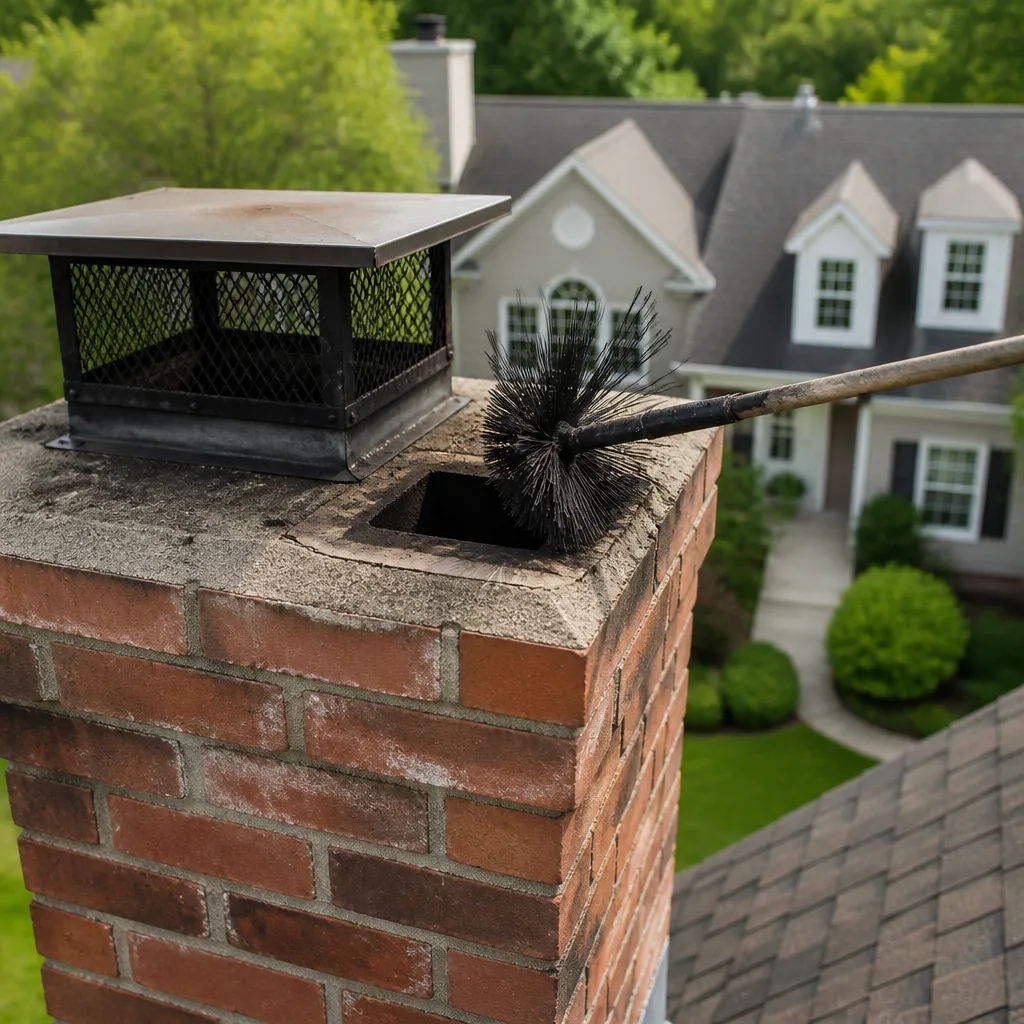 Sweep & inspection
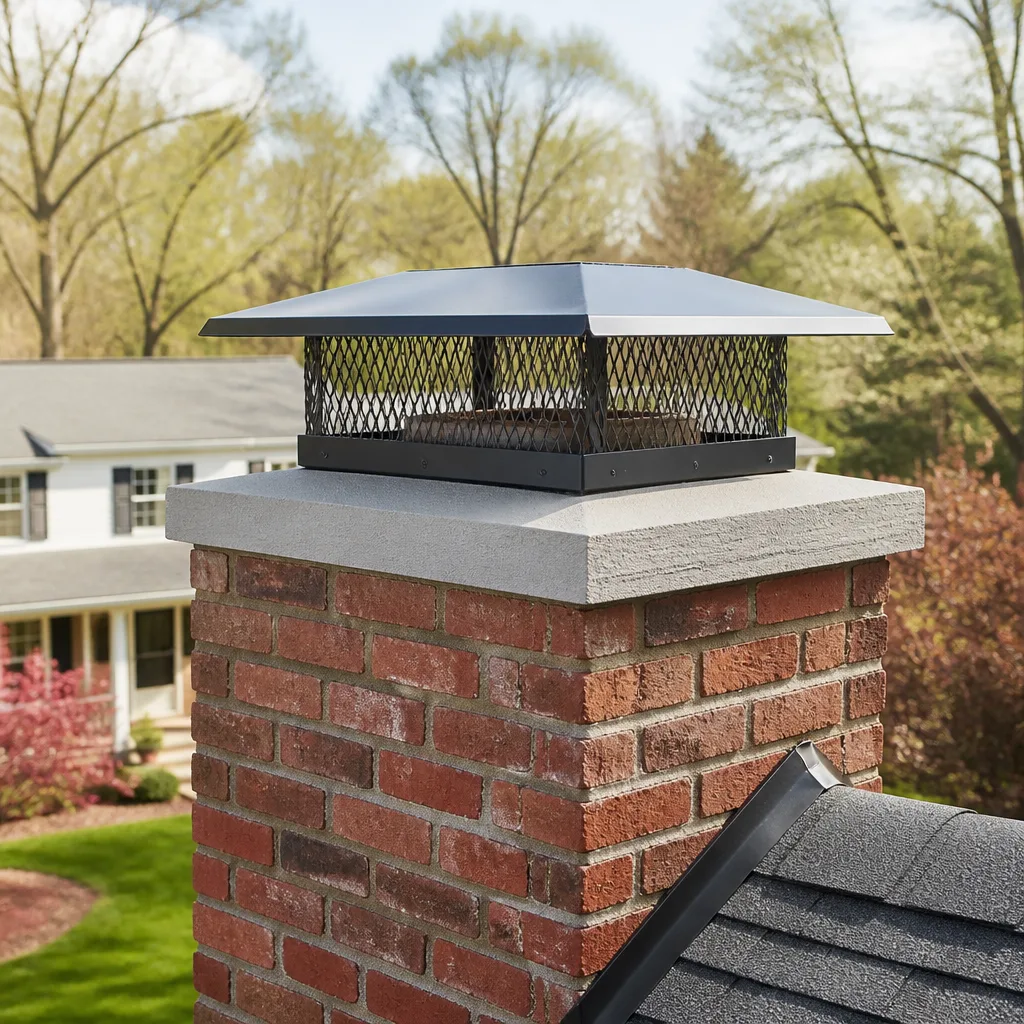 Caps & crowns
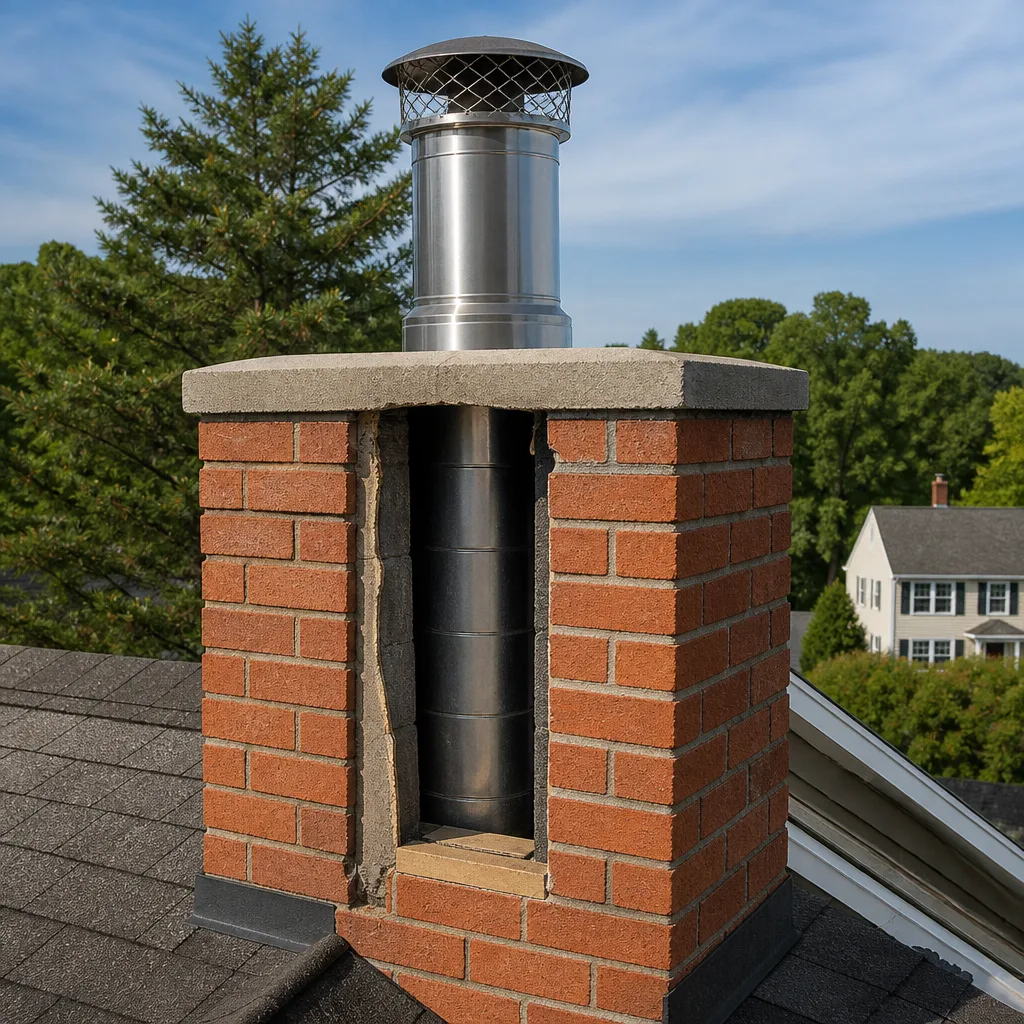 Flue relining
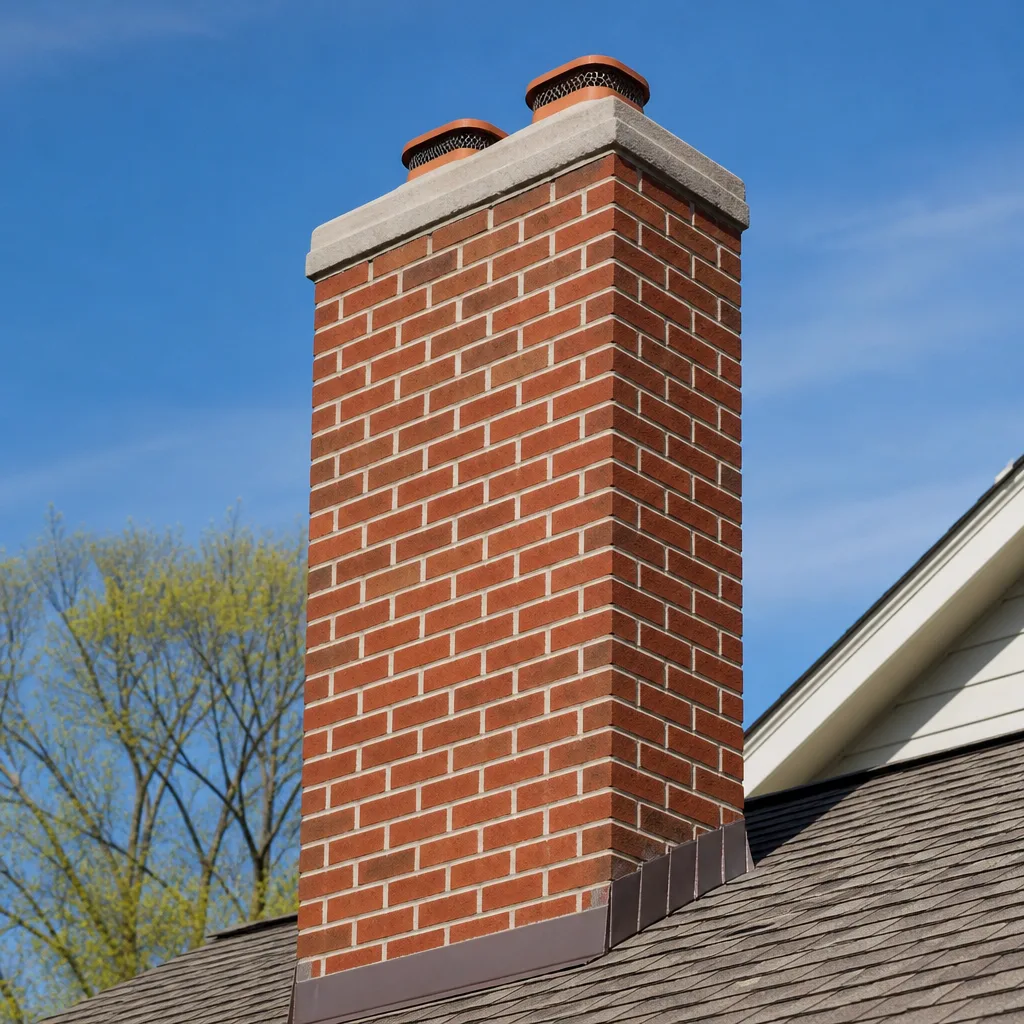 Masonry repair
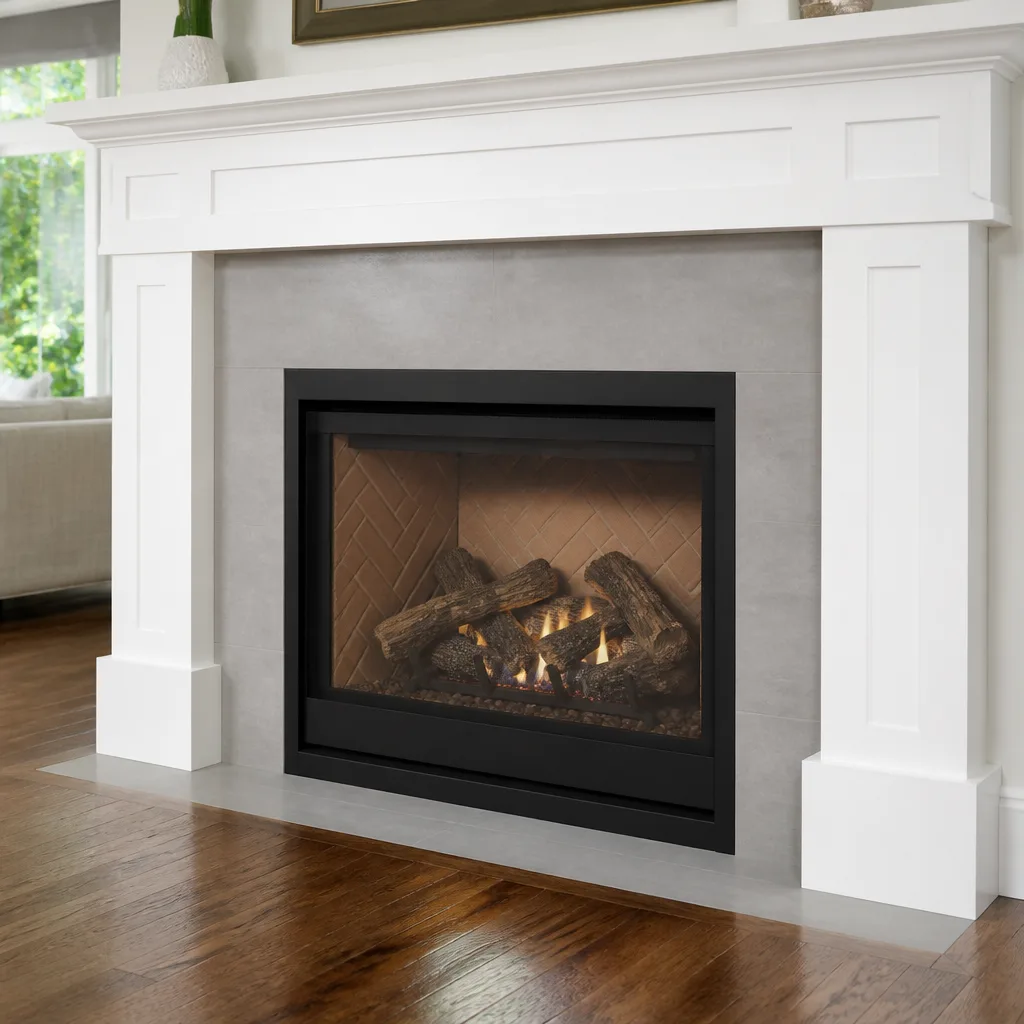 Gas fireplace service
Level 1 sweep and inspection to the NFPA 211 annual standard - flue, crown, cap, and flashing checked and photographed
Chimney sweep logs do not sweep chimneys. They loosen some creosote - which then falls where a brush and vacuum still have to collect it.
Chimney Cleaning Warning Signs: A Fontana Homeowner’s Reference Guide
Most chimney warning sign lists tell you what to look for. Few tell you what you’re actually looking at. A white stain running down the outside of a chimney looks like a cosmetic problem. It’s not. It’s evidence that water is moving through the masonry in a way that, left alone, will destroy the liner from the outside in. This guide is different. We’ll walk through what each visible symptom actually indicates structurally, so you can describe what you’re seeing to a technician with precision and know whether you’re looking at an urgent repair or something that belongs on a watch list. Fontana’s dry heat and seasonal rains create a specific set of conditions that accelerate certain chimney failures. By the end, you’ll know which warning signs demand action today, which can wait a month, and which are just part of normal operation.
Quick Answer
The most serious chimney warning signs for a Fontana homeowner are white staining (efflorescence) on the exterior masonry, spalling or flaking brick, smoke rolling back into the room instead of drafting up, a rusting damper assembly, and dark staining on the ceiling or walls around the fireplace. Any of these means the flue system is compromised and should be inspected before the next fire, as noted in our Chimney Sweep Maintenance Checklist for Fontana Homeowners. A musty smell points to creosote and moisture buildup. An acrid, sharp odor after a rain points to water mixing with creosote. A gas-adjacent smell from a gas fireplace vent means stop using it and call a technician immediately.
Styles & brands we work with
Table of Contents
- White Staining (Efflorescence): Water Has Already Entered the System
- Spalling Brick: Freeze-Thaw Damage and Structural Deterioration
- Smoke Rollout and Backdrafting: What It Means for Wood and Gas Fireplaces
- Rust on the Damper and Firebox: A Sign Your Flue Liner Is Failing
- Dark Staining Around the Fireplace or Ceiling: Creosote, Soot, or Something Worse
- Smell-Based Indicators: Musty, Acrid, and Gas-Adjacent Odors Explained
- Urgency Triage: Stop Using, Schedule Within 30 Days, or Routine Maintenance
- Gas Appliance Venting Warning Signs Most Homeowners Miss
White Staining (Efflorescence): Water Has Already Entered the System
Efflorescence is the white, chalky residue that appears on brick and mortar. It forms when water dissolves salts inside the masonry, carries them to the surface, and evaporates, leaving the salts behind. What looks like a surface stain is actually a record of water migration through your chimney. In Fontana, this is not a rare condition. Our dry summers pull moisture out of the flue, and the winter rains push it back in. That cycle concentrates salts near the surface and accelerates the staining.
Efflorescence itself does not destroy brick on its own. What it signals is the real threat. Water is moving through the chimney structure. That water eventually reaches the flue liner. When a clay tile liner absorbs moisture repeatedly, it cracks under thermal stress from the next fire. The crack then allows heat, gases, and creosote to migrate into the surrounding masonry and, in worst cases, into the home. In our experience, a Fontana chimney with visible efflorescence has about a two-year window before the liner needs serious attention, assuming no other issues.
The structural concern is not the salt. It’s the path the water took to get there. Common entry points include a cracked crown, deteriorated mortar joints, damaged flashing at the roofline, or a missing chimney cap. Each requires a different repair. If you call a technician and say “I have white staining on the east face of the chimney,” that tells us where to start looking. If you say “there’s white stuff on the brick,” that starts a longer diagnostic conversation.
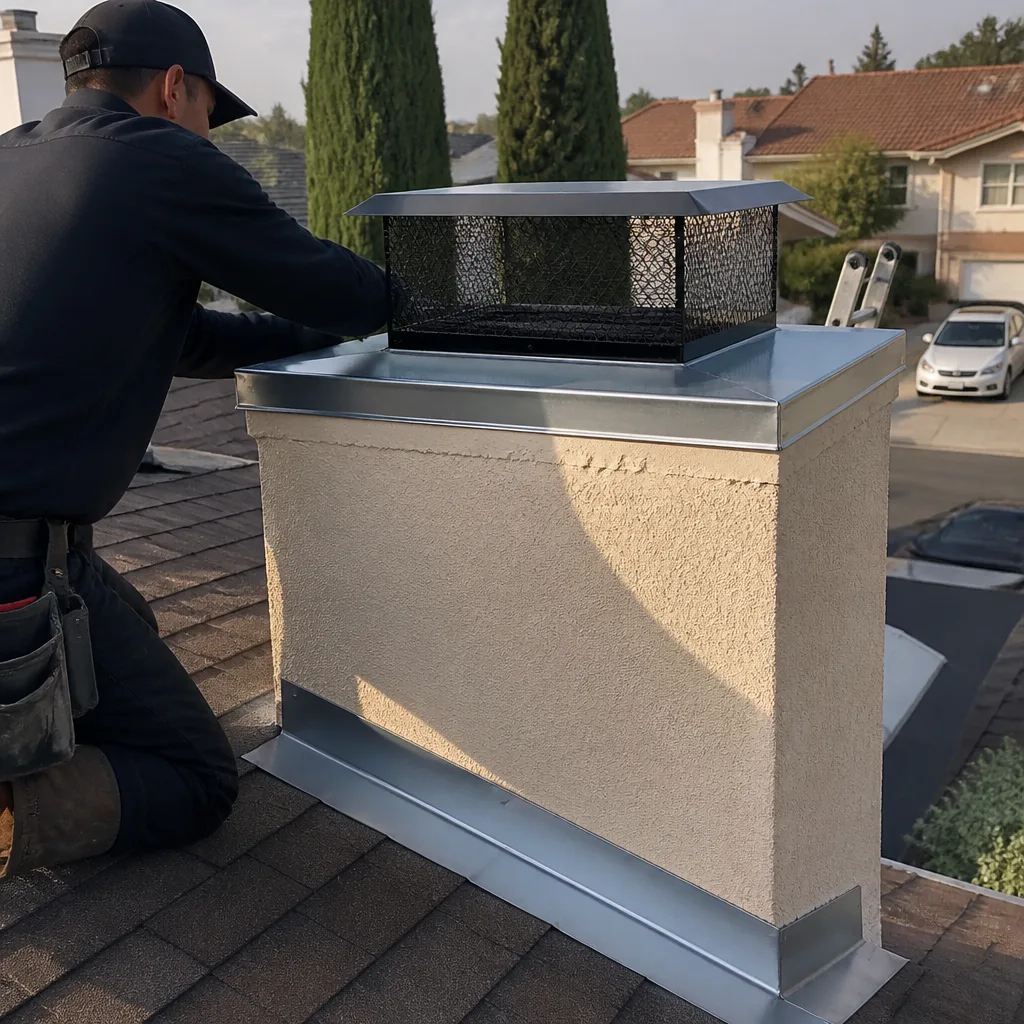
Efflorescence can sometimes be brushed off and monitored. But if it returns within a season, the water source is active. That’s a Chimney Repair in Fontana issue, not a cleaning issue. Ashwood Chimney Sweep approaches this by first identifying the entry point, then recommending a repair that uses professional-grade materials from Olympia Chimney and Copperfield, not a sealant that traps moisture inside the brick.
Spalling Brick: Freeze-Thaw Damage and Structural Deterioration
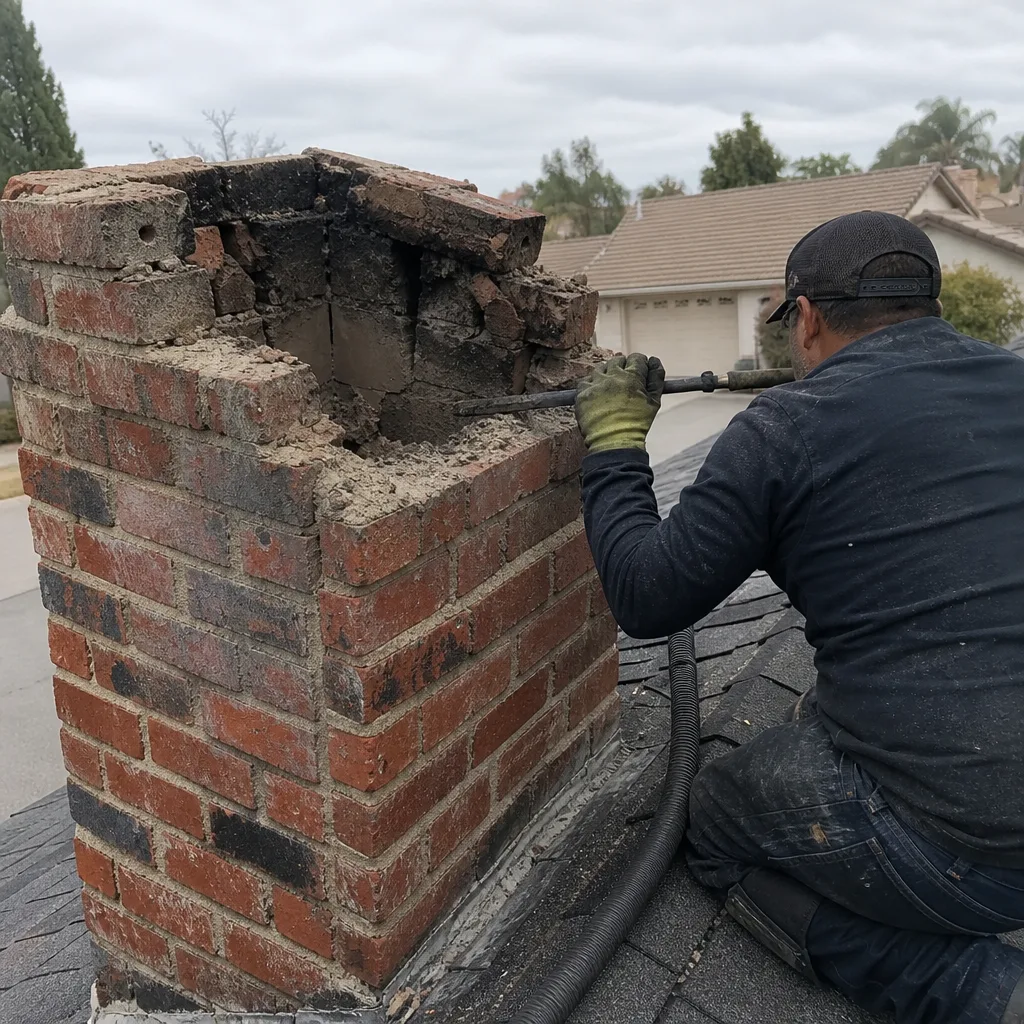
Spalling is when the face of a brick flakes off, leaves crumbling fragments on the ground or roof, and exposes the softer interior of the brick. It looks like the chimney is shedding. In Fontana, spalling is less about freezing and more about moisture expansion. Water enters the brick through a cracked crown or failed mortar, saturates it, and then our hot summer days bake that moisture outward. The face of the brick pops off under the pressure. Over time, the chimney loses structural material from the outside in.
Spalling is more serious than efflorescence. Efflorescence tells you water is present. Spalling tells you water has already caused physical damage. A spalling chimney cannot be cleaned back to health. The damaged bricks must be replaced, and the moisture entry point must be sealed. In the meantime, the chimney becomes less stable. In a seismic event, a severely spalled chimney is more likely to collapse through the roofline or into the house. That is not a scare statement. It is a load-bearing reality.
We tell Fontana homeowners to check the ground around the chimney after heavy wind or rain. If you find brick fragments, that’s an active failure. Schedule an inspection. If you find chunks the size of a quarter or larger, treat it as a 30-day repair item. If you find structural cracks wider than a pencil line running through the brick, stop using the fireplace and call us.
Repair scope depends on how far the spalling has progressed. Minor spalling on a few bricks can be addressed with brick replacement and tuckpointing. Advanced spalling across the length of the chimney typically requires partial or full rebuild. We use materials sourced from Copperfield and Olympia Chimney, brands we selected using the same criteria outlined in our Choosing the Right Chimney Cleaning Brand: A Buyer’s Guide for Fontana, because the mortar mix and brick type need to match the original structure. A mismatched mortar causes its own set of expansion and contraction problems down the line.
Smoke Rollout and Backdrafting: What It Means for Wood and Gas Fireplaces
Smoke rollout happens when the chimney refuses to draw and smoke spills back into the room. The first puff might be small. The second fills your living room. Homeowners often call this “a drafty fireplace.” It is not a draft. It is a drafting failure, and it has a specific cause.
For a wood-burning fireplace, the most common causes are a cold flue, a clogged flue, a damper that is not fully open, or negative air pressure in the house. In Fontana, we see a specific pattern. Homes built in the 1980s and 1990s were often constructed tight to save on cooling costs. When your bathroom fans, kitchen hood, and dryer are all running, they pull air out of the house. The fireplace becomes the make-up air source, and instead of pulling smoke up, it pulls outside air down through the chimney. The smoke goes into the room.
There is also a structural angle. If the flue liner is cracked or missing sections, the chimney cannot maintain the necessary draft. The smoke slows down, cools, and rolls back. This is not something a cleaning will fix. The liner itself is compromised. If the flue has a partial blockage from animal nesting or heavy creosote, a proper Chimney Sweep in Fontana can clear it. If the blockage is gone and the rollout continues, the liner needs evaluation.
Gas fireplaces produce a different kind of rollout. The exhaust is mostly carbon monoxide and water vapor. You might not see visible smoke. You might notice condensation on windows near the fireplace, a sulfur-like smell, or a pilot light that keeps going out. These are all backdrafting symptoms in a gas vented system. Stop using the gas fireplace and call a technician the same day. Carbon monoxide exposure does not give you a warning before it makes you sick.
Rust on the Damper and Firebox: A Sign Your Flue Liner Is Failing
Reach inside the firebox and look up at the damper. If you see orange rust, the question is where the moisture came from. A damper is metal. It rusts when water drips down the flue or when acidic condensation lingers after a fire. Both point to a bigger issue.
Water coming down the flue usually means the chimney cap is missing or the crown is cracked. That is a straightforward fix when caught early. The more concerning cause is condensation. When a flue liner is deteriorating, hot gases reach the cooler masonry, condense on the inner wall, and run back down as acidic liquid. That liquid eats the damper, the firebox walls, and eventually the smoke shelf. In other words, a rusted damper can be the first visible sign of a failing liner that you cannot see without a camera inspection.
Fontana homeowners often dismiss a rusted damper as “an older fireplace thing.” It is not normal. A damper should last decades when the chimney above it is sound. If you replace the damper without addressing the moisture source, the new damper rusts out in a few seasons. We see that pattern repeatedly.
If rust is accompanied by flaking metal or a damper that will not fully seat, the firebox is being exposed to repeated moisture cycles. A camera inspection will show whether the flue liner is intact. If the liner is cracked or missing sections, one repair option is HeatShield, a restoration product we use that repairs the liner from the inside without full demolition. Not every chimney needs a full reline. Many need targeted restoration. The only way to know is to see the flue with a camera.
Dark Staining Around the Fireplace or Ceiling: Creosote, Soot, or Something Worse
Dark staining around the fireplace opening, the mantle, or on the ceiling above the chimney chase usually means one of three things. First, creosote is building up faster than the flue can move smoke, and the smoke is depositing soot on the surrounding surfaces. Second, there is a hidden leak at the flashing or crown, and the water is picking up soot as it travels through the structure. Third, there is a gap between the flue and the surrounding framing, and smoke is bypassing the liner entirely.
Each cause is different in severity. Creosote staining responds to cleaning and a review of burning habits. Water staining with soot points to a leak that must be repaired. Smoke bypassing the liner is the serious one. It means the flue is not containing the exhaust, and the same path that soot travels is a path for carbon monoxide.
How can a Fontana homeowner distinguish between these without tools? Look at the pattern. Staining that is dark, dry, and powdery, concentrated directly above the fireplace opening, is usually creosote deposition from smoke rollout. Staining that appears as irregular brown or yellow rings on the ceiling, appearing after rain, is water-based. Staining that is black and sticky, spreading beyond the immediate fireplace area, suggests smoke is finding a path through the framing. That last one means stop using the fireplace and call for an inspection.
Ashwood Chimney Sweep includes a camera inspection with our sweep service so we can see the flue from the inside. If the liner is intact, the staining is a cleaning and weatherproofing issue. If it is not intact, we quote the repair honestly. We do not recommend liner work without camera evidence you can see for yourself.
Smell-Based Indicators: Musty, Acrid, and Gas-Adjacent Odors Explained
Smell is the cheapest diagnostic tool you own. Your nose will tell you things a glance will not.
A musty smell, like wet leaves or old basement, coming from the fireplace on a dry day means organic material is trapped somewhere in the flue. It could be an animal nest, accumulated debris, or creosote that has absorbed moisture. In Fontana, squirrel and bird nesting in chimneys is common. The smell is strongest on days when the house is closed up. That’s a cleaning issue, but it needs to happen before the next burn. Burning through a nest causes a chimney fire or a smoke backup.
An acrid, sharp smell, like burnt tar, is creosote. Third-degree creosote is a hardened, shiny glaze that coats the flue. It smells even when the fireplace is cold, and the smell intensifies on humid days or after rain. This level of buildup does not brush off with a standard sweeping. It requires mechanical or chemical treatment. It is also the most likely fuel for a chimney fire.
A gas-adjacent smell from a gas fireplace or gas water heater vent is a stop-using-it-today signal. Natural gas is odorized with mercaptan, which smells like rotten eggs or sulfur. But some combustion byproducts smell similar enough that a homeowner cannot reliably distinguish between an exhaust leak and a gas leak. Either way, the correct action is the same. Shut down the appliance, ventilate the room, and call a professional. Do not try to isolate the source yourself. Carbon monoxide is odorless, and it often rides along with the same conditions that cause the smell you can detect.
Urgency Triage: Stop Using, Schedule Within 30 Days, or Routine Maintenance
We divide chimney warning signs into three categories: stop using today, schedule within 30 days, and handle at your next routine service.
Stop Using the Fireplace Today
- Gas-adjacent or rotten-egg smell from a gas fireplace or vented gas appliance. Shut it down and call.
- Visible smoke rollout that does not resolve within a minute of starting the fire. This indicates a significant drafting failure or obstruction.
- Black, sticky staining spreading beyond the fireplace onto walls or ceiling. Smoke is moving through the framing.
- Structural cracks wider than a pencil line running through brick or mortar.
- Brick fragments falling from the chimney during or after use.
Schedule Within 30 Days
- Spalling brick observed anywhere on the chimney structure. The damage will not reverse itself, and it worsens each season.
- Rust visible on the damper or firebox. Moisture is entering the system and needs to be traced.
- White efflorescence that returns after being brushed off. Active water movement through the masonry.
- Musty smell from the fireplace that does not clear after airing out the room.
Routine Maintenance Items
- Light soot or gray powder inside the firebox after burning. Normal byproduct of wood combustion.
- First signs of light creosote buildup observed during annual cleaning. Schedule the sweep at your next convenience before the burning season.
- Slight cold-air smell from the chimney when not in use, with no other symptoms. This is often fixed with a properly adjusted damper or a top-sealing cap.
Gas Appliance Venting Warning Signs Most Homeowners Miss
Gas fireplaces, gas inserts, and gas water heaters vent through chimneys and flues too. The warning signs are less obvious because there is no creosote or smoke. Fontana homes with gas appliances are common, and the venting problems are routinely misattributed to drafts, HVAC issues, or “the house settling.”
The first sign is moisture. A properly vented gas appliance exhausts water vapor. When the vent is partially blocked or deteriorating, that moisture lingers and condenses inside the flue. You see it as condensation on cold windows near the fireplace, peeling paint on the chimney chase, or rust on the appliance’s vent connection. Any of these means the exhaust is not leaving the home efficiently.
The second sign is backdrafting. If the pilot light on a gas fireplace repeatedly blows out, if you notice a stale, warm exhaust smell near the fireplace, or if the fire produces a lazy yellow flame instead of a clean blue one, the vent is not maintaining draft. Backdrafting gas appliances pull carbon monoxide into the living space. This is a life-safety issue, not a comfort issue.
The third sign is corrosion on the vent cap or roof flashing. Gas exhaust is acidic when it condenses. Over time, that acidity eats metal fittings at the top of the vent system. If you see white or green corrosion on the metal vent cap, the cap is deteriorating from the inside out. The fix is a replacement vent cap and verification that the liner is still sound.
We recommend all gas appliance venting be inspected as part of the same service call when we Clean Dryer Vents in Fontana or perform chimney sweeping. A home’s ventilation systems share common failure paths. Moisture management is moisture management, whether the source is a dryer, a gas fireplace, or a wood-burning flue.
How Fontana’s Climate Affects Your Chimney
Fontana sits at the base of the San Bernardino Mountains. The climate is arid, with summer temperatures that regularly exceed 95 degrees. Winter brings rain, and while freezing is rare, the combination of intense seasonal heat and occasional heavy rain creates a specific stress pattern for chimneys.
Thermal expansion is the invisible issue. A chimney bakes in the sun all day and cools rapidly at night. Brick and mortar expand at different rates. Over decades, this differential movement opens hairline cracks in the mortar joints. Most Fontana homeowners will not notice the first cracks. They are too thin. But once water enters those cracks during the winter rains, the damage compounds. Moisture inside masonry plus heat from the next fire creates steam pressure inside the chimney structure. That pressure widens the cracks and pushes spalling brick faces off.
The takeaway for Fontana homeowners: your chimney is not a static structure. It moves, breathes, and absorbs. The warning signs in this guide are not random. They are the visible output of a predictable thermal and moisture cycle. A chimney that is inspected and maintained annually simply has fewer places for that cycle to take hold.
The other local factor is our wind. Santa Ana winds in the fall and winter create negative pressure zones around the roofline. A chimney that drafts fine on a still day may roll smoke back into the room during a Santa Ana event. This is partly a design issue and partly a maintenance issue. A clean flue with a properly fitted cap will be less affected by wind-driven backdrafting than a partially clogged flue with a damaged cap.
Common Mistakes to Avoid
- Brushing off efflorescence and assuming it’s cosmetic. The white stain is a water movement indicator. If it keeps returning, the chimney is taking on water, and ignoring it turns a minor crown repair into a liner failure.
- Running bathroom fans and the kitchen hood while the fireplace is lit. In Fontana’s tight construction, negative pressure reverses the chimney draft. Smoke in the room is not always a chimney problem. It is often a house-pressure problem.
- Replacing a rusted damper without investigating the moisture source. The new damper will rust out in a season or two. You will pay for the same repair twice.
- Burning wet or unseasoned wood. The excess moisture cools the flue gases, which accelerates creosote condensation. If your wood supply gets rained on and you do not cover it, you are loading the chimney with a deposit that will not brush off easily.
- Assuming gas fireplaces do not need chimney service. Gas exhaust is acidic and moisture-heavy. It corrodes liners and vent caps. Annual inspection matters just as much as for wood systems.
- Using a general handyman for chimney repairs. The mortar mix, liner material, and cap design all affect how the chimney performs under thermal stress. Materials from Olympia Chimney and Copperfield exist because the chimney trade specifies them for a reason.
- Ignoring dark ceiling staining because “it’s probably just paint.” Paint does not darken along a path from the fireplace. That staining is smoke or water finding a route through the structure. Find and stop the source.
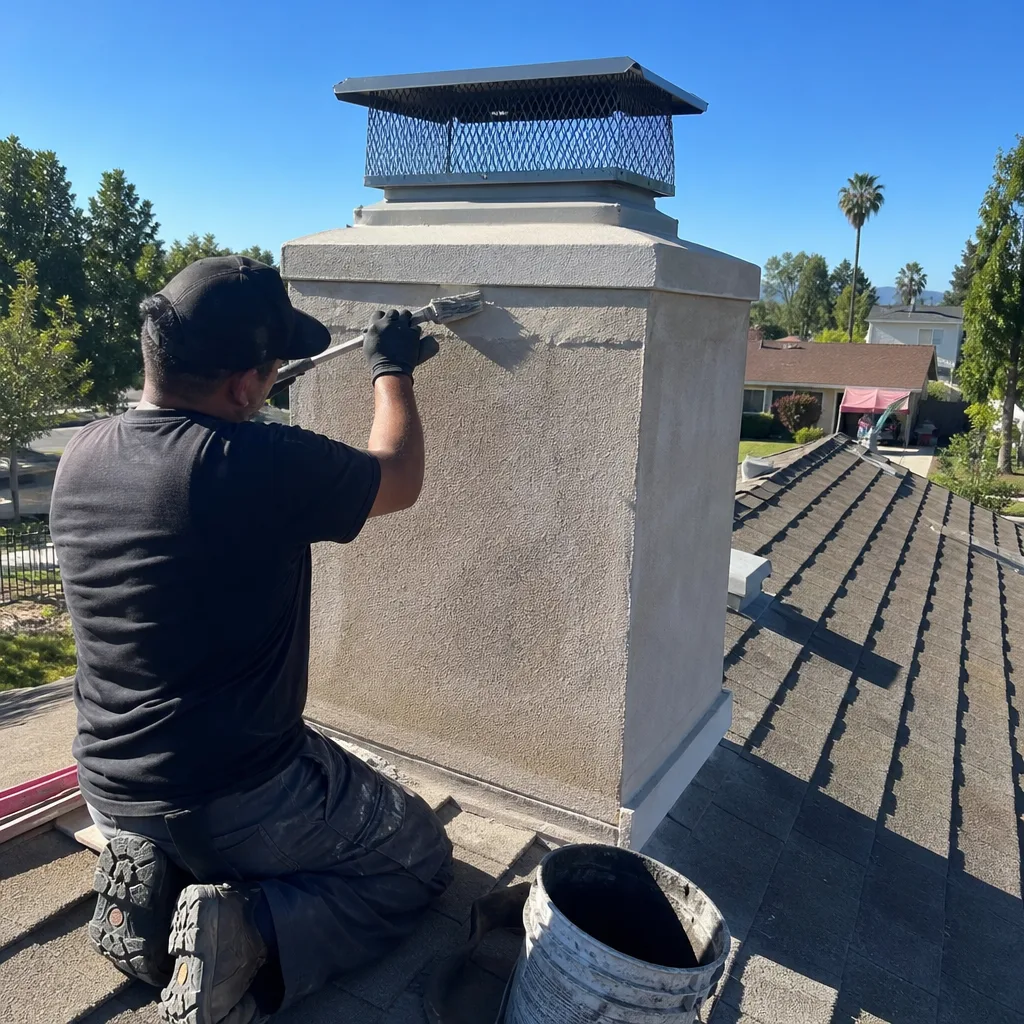
See the difference
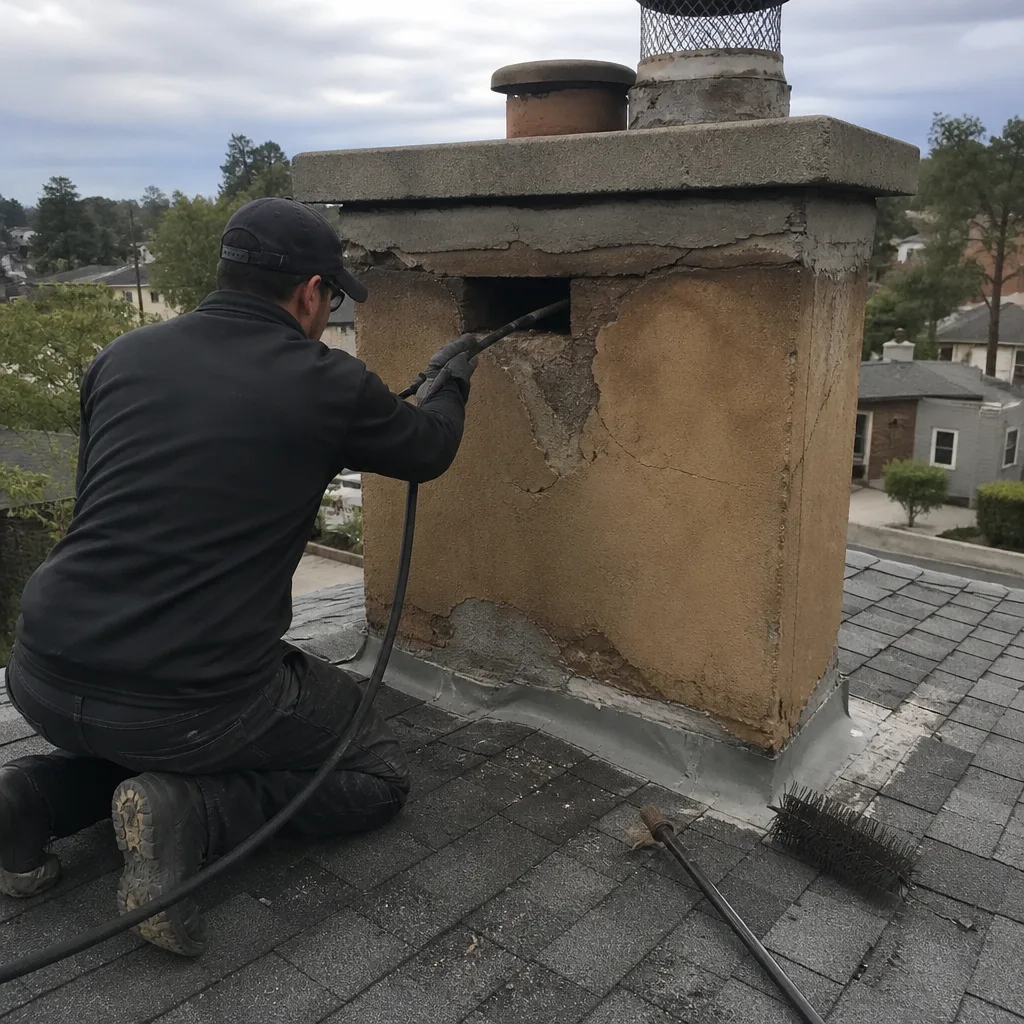 Before
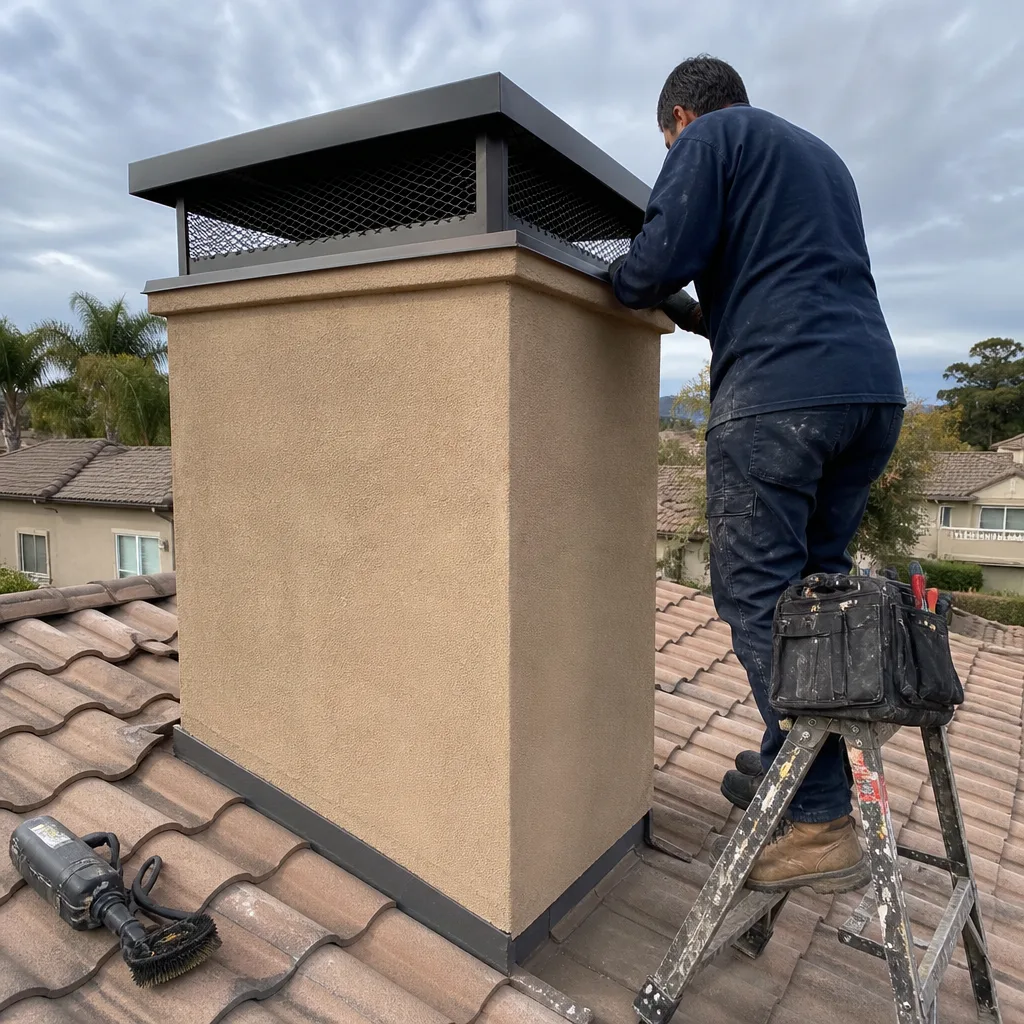 After
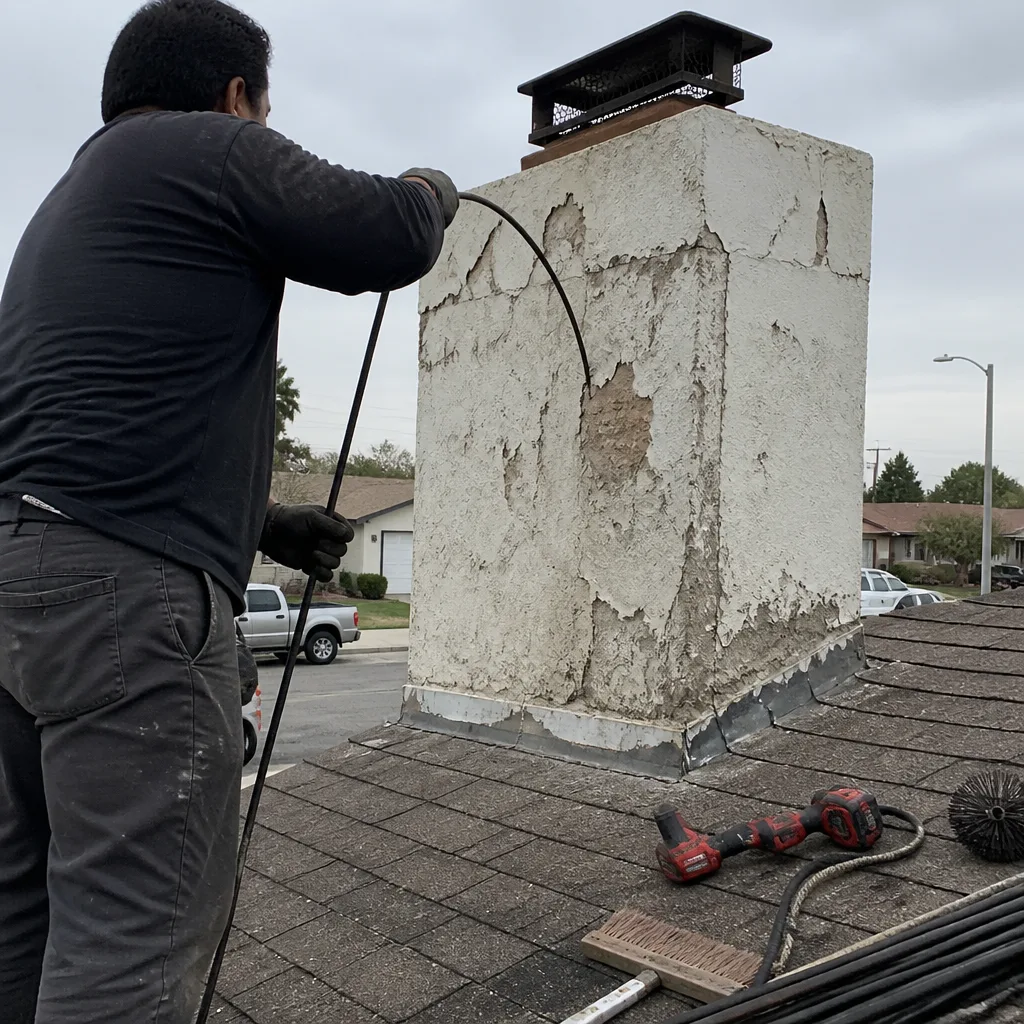 Before
 After
 Before
 After
When to Call a Professional
Every chimney warning sign in this guide has one thing in common: the cause is rarely visible from the ground or from inside the firebox. You can see efflorescence, but you cannot see the crack in the crown that let the water in. You can smell creosote, but you cannot see whether it is first-degree flake or third-degree glaze. You can feel the downdraft, but you cannot see the partial flue blockage behind the damper.
Call a professional when you see any of the stop-using signs listed above, when a symptom returns after you have addressed the obvious cause, or when you are uncertain whether a visible issue is cosmetic or structural. A proper diagnostic visit includes a camera inspection of the flue, a check of the crown and flashing, and an honest answer about what needs attention now versus what can wait. For additional guidance, see our more guides & resources.
Ashwood Chimney Sweep offers free estimates in Fontana. Call (833) 805-3229 and we’ll walk you through what we find. You will see the camera footage yourself. Nothing gets recommended without visual evidence.
Ashwood Chimney Sweep home is based in Fontana and serves the surrounding Inland Empire communities. We handle the whole flue, not just the easy parts.
Frequently Asked Questions
A standard chimney sweeping and inspection in Fontana typically runs between $180 and $320. The final quote depends on the chimney’s condition, the amount of creosote buildup, any blockages that need removal, and whether the flue requires special treatment for glaze-level creosote. Call (833) 805-3229 for a free estimate. We quote the sweep before we book it.
A failing liner shows indirect symptoms: rust on the damper, smoke rollout that persists after cleaning, black staining spreading beyond the fireplace, or pieces of clay tile showing up at the bottom of the flue. The only way to confirm it is a camera inspection of the flue. Ashwood Chimney Sweep includes that camera check with our service so you can see the liner’s condition for yourself.
Not every deteriorating liner needs full replacement. Some can be restored with HeatShield, a product that seals and strengthens the existing liner without demolition. The right answer depends on how much of the liner is damaged, where the damage is, and whether the surrounding masonry is sound. We will show you the camera footage and tell you plainly if restoration is an option. We will also tell you when it is not.
Once a year if you burn wood regularly, even a few fires per season. The National Fire Protection Association recommends annual inspection and cleaning as needed. In Fontana, the dry climate and typical burning patterns mean creosote builds up slowly compared to humid climates, but animal nesting and wind-borne debris are common. An annual visit catches those issues before they become blockages.
Creosote accumulates. The flue narrows. Draft slows. More smoke lingers in the flue and condenses. The creosote hardens into a glaze that feeds a chimney fire. If no chimney fire occurs, the restricted flue still pushes smoke and carbon monoxide back into the living space. The chimney tells you it is failing. By the time you notice, the repair bill is larger than the cost of every sweeping you skipped.
Yes. Dryer Vent Cleaning in Fontana is a core service at Ashwood, not an add-on. A clogged dryer vent is a fire-risk system. We treat it with the same seriousness as chimney work, using Famco ventilation hardware and inspecting the full vent run, not just the first few feet. One call covers the chimney, the dryer vent, and any repairs either system needs.
The Bottom Line
Most chimney warning signs are visible long before a failure turns dangerous. The white stain, the flaking brick, the smoke that rolls back, the rust on the damper, the dark patch on the ceiling. Each one is the chimney telling you what is happening inside the flue. The work is in reading the signal correctly and acting before a liner failure or a chimney fire makes the decision for you. Fontana’s climate accelerates a specific type of damage, but it also gives you clear symptoms. An annual inspection, a camera check, and a technician who shows you the evidence are the difference between a minor repair and a major rebuild. If you see any of the signs in this guide, call (833) 805-3229 for a free estimate. The estimate costs nothing. The information is worth the call.
Written by the team at Ashwood Chimney Sweep, serving Fontana since 2012.