Last updated October 30, 2026
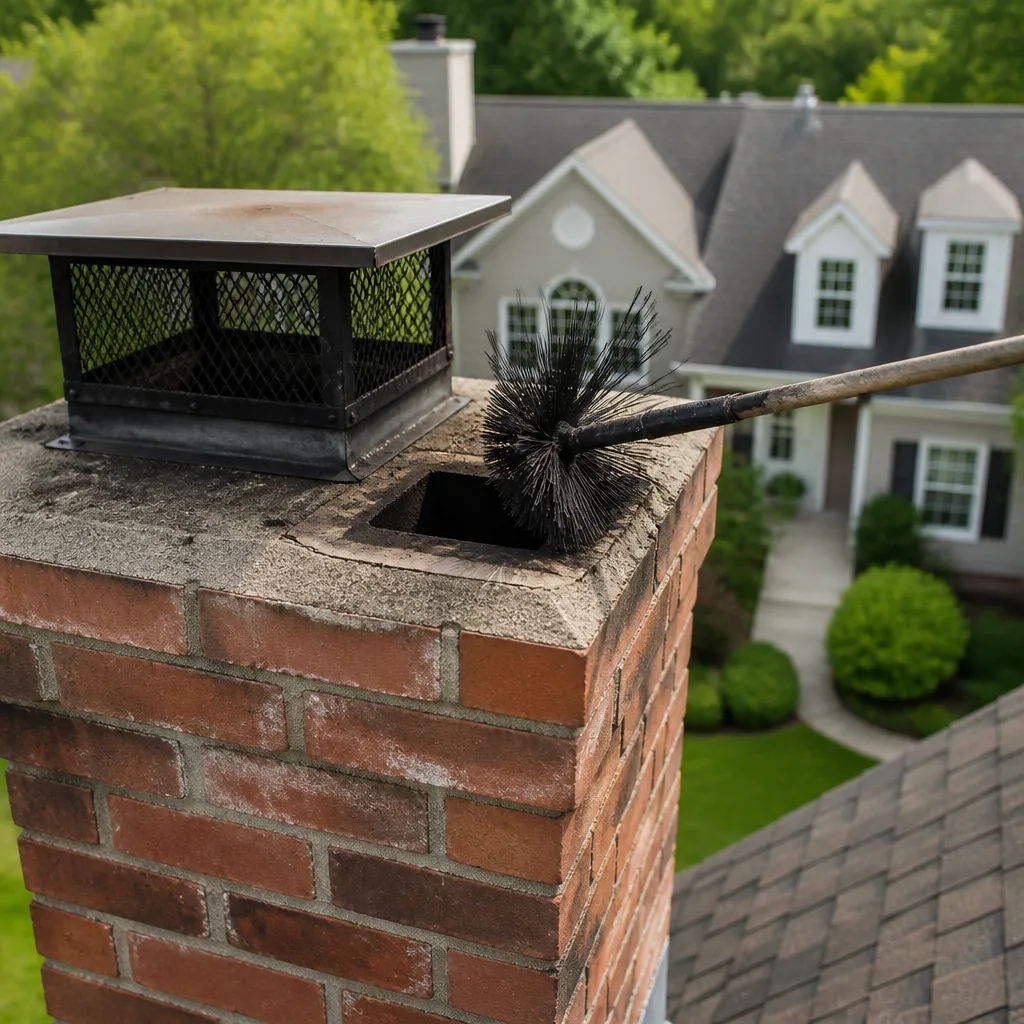 Sweep & inspection
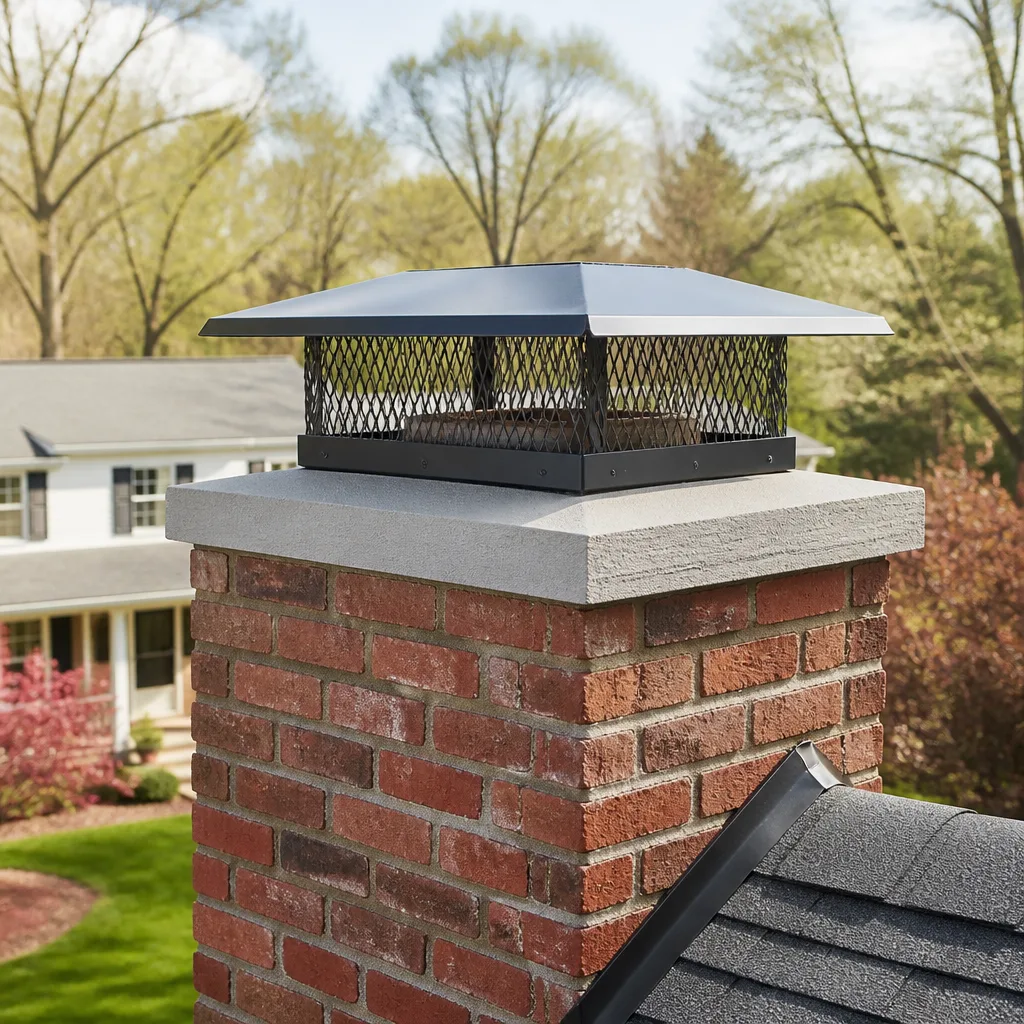 Caps & crowns
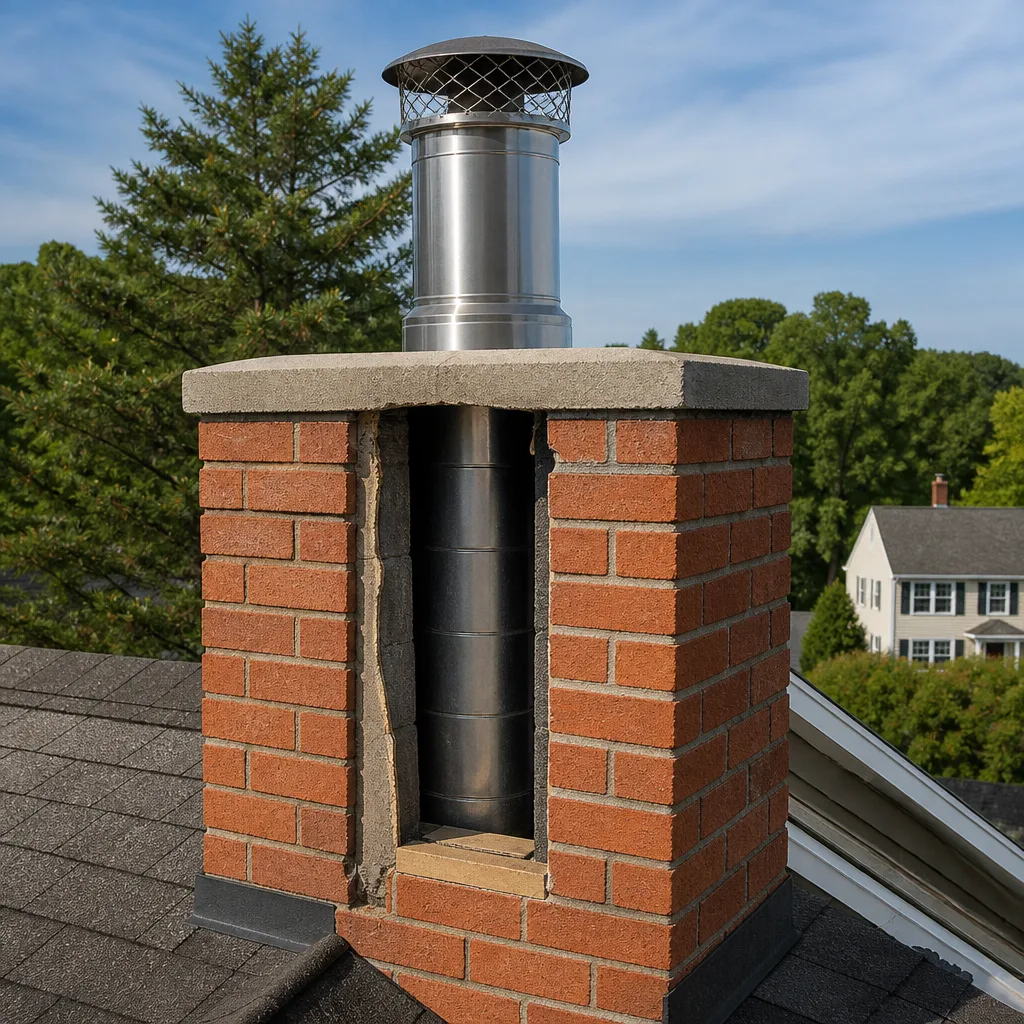 Flue relining
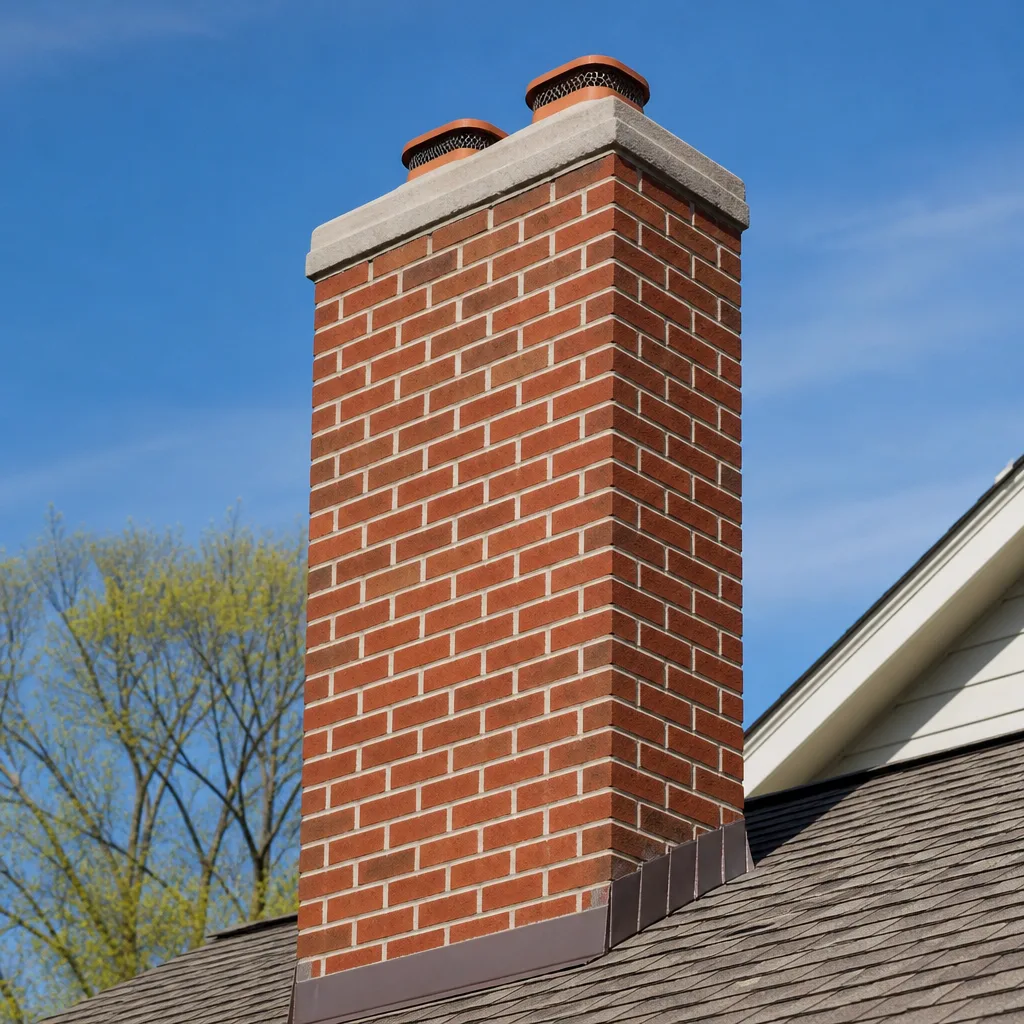 Masonry repair
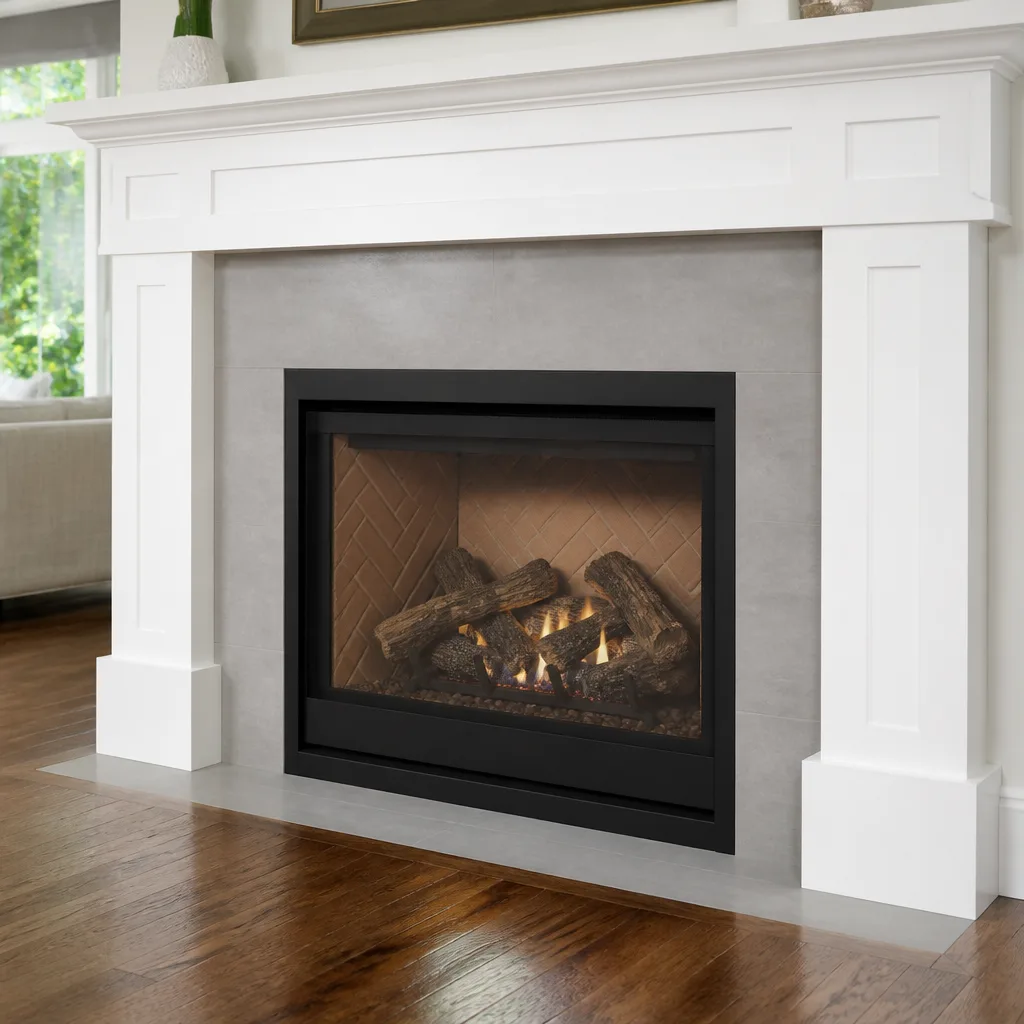 Gas fireplace service
Level 1 sweep and inspection to the NFPA 211 annual standard - flue, crown, cap, and flashing checked and photographed
Chimney sweep logs do not sweep chimneys. They loosen some creosote - which then falls where a brush and vacuum still have to collect it.
DIY vs Professional Chimney Cleaning: The Fontana Homeowner’s Decision Guide
You can buy a chimney brush kit for $40 and clear visible soot from the firebox. But the third-stage creosote glaze forming on the upper liner, the stuff that actually fuels chimney fires, requires a rotary cleaning system that costs more than most Fontana homeowners earn in a week. This guide walks through what consumer tools can and cannot do, what professional equipment actually accomplishes, and when doing it yourself saves money versus when it sets you up for a much larger bill later.
Quick Answer
For light maintenance like clearing ash from the firebox or checking the cap from the ground, a careful Fontana homeowner can handle it safely. But removing creosote from the flue liner itself, evaluating liner integrity, and documenting the condition for insurance purposes requires professional equipment, training, and inspection camera access that no consumer kit provides. Most Fontana homes we see fall somewhere in between: safe to maintain on the surface, unsafe to clean thoroughly without a pro.
Styles & brands we work with
Table of Contents
- What DIY Chimney Cleaning Actually Means
- The Creosote Problem: Why Stage Matters More Than Quantity
- The Equipment Gap: What Professionals Use That You Can’t Buy at Home Depot
- What a Fontana Homeowner Can Safely Do Themselves
- Insurance and Liability: What Your Carrier Expects in California
- The Break-Even Analysis: When DIY Saves and When It Costs More
- Common Mistakes to Avoid
- When to Call a Professional
What DIY Chimney Cleaning Actually Means
When most Fontana homeowners say they want to clean their own chimney, what they’re really describing is brushing visible soot from the firebox and maybe running a wire brush up the first few feet of flue they can reach from below. That’s not chimney cleaning. That’s surface tidying. The flue liner extends 15 to 30 feet above the firebox, and the creosote that builds along its upper third is invisible from below and unreachable without scaffolding, ladder work, or roof access.
A consumer chimney brush kit typically includes a wire or poly brush head, a set of fiberglass rods, and maybe a drop cloth. What it does well: dislodging loose, first-stage creosote from the lower flue if the homeowner can actually reach it. What it does poorly: removing second-stage creosote (the flaky, tar-like deposits), addressing third-stage creosote (the hardened, shiny glaze), accessing the upper flue, containing fine particulate dust inside the home, and evaluating whether the liner has cracks, gaps, or spalling that make the chimney unsafe to use at all.
In Fontana’s high-desert climate, where summer temperatures regularly exceed 100 degrees and winter fires are intermittent, creosote forms differently than in colder, wetter climates. The heating and cooling cycle causes condensation inside the flue that accelerates creosote buildup, especially in uninsulated exterior chimney stacks common in older Fontana ranch homes built in the 1970s and 1980s. We’ve inspected chimneys in Southridge Village and West End neighborhoods where homeowners had brushed their own flues for years and still carried a quarter-inch of hardened glaze on the upper liner, because the brush never reached that high with enough agitation to matter.
The honest take: DIY chimney cleaning is real, but it covers maybe 20% of what a full professional sweep involves. The other 80% is access, agitation, extraction, and evaluation. If a homeowner understands that limitation and treats DIY as supplementary maintenance between professional inspections, it can work. If they treat it as a replacement for professional cleaning, they’re leaving the most dangerous part of the system untouched.
The Creosote Problem: Why Stage Matters More Than Quantity
Creosote is not one substance. It’s a family of combustion byproducts that condense on the flue wall at different temperatures and harden into three distinct stages. Understanding the stages matters because consumer brushes only handle one of them.
First-stage creosote is a fine, sooty powder. It brushes off easily with any wire brush. This is the only stage a homeowner can realistically remove with a consumer kit.
Second-stage creosote is flaky and tar-like, with the consistency of dried molasses. It requires aggressive mechanical agitation, usually with a rotary loop system or scraping tool, to break free. Consumer brushes pushed up and down by hand lack the rotational force to remove it. It also produces substantial dust that needs a HEPA-rated vacuum containment system, not a shop vac with a standard filter.
Third-stage creosote is the danger stage. It’s a hardened, shiny glaze that forms when second-stage creosote undergoes repeated heating and cooling cycles. It’s highly concentrated fuel, burns at extremely high temperatures, and resists brushing almost entirely. Removing it requires rotary cleaning heads with carbide-tipped chains or a chemical treatment followed by mechanical removal. In some cases, third-stage creosote has to be addressed with professional-grade chemical treatments and multiple passes. No consumer product available in Fontana stores can remove it.
Here’s the counterintuitive part: a thin layer of third-stage creosote is more dangerous than a thick layer of first-stage creosote. Homeowners tend to judge chimney cleanliness by how much black dust they sweep up, but the glaze on the upper liner is what actually sustains a chimney fire. A chimney fire doesn’t need a lot of fuel. It needs fuel in the right form, and hardened glaze burns like a candle. This is why a chimney can look clean from the bottom and still be a fire hazard.
Fontana’s burn season runs from roughly October through March, and the pattern we see is predictable: intermittent fires on cold nights, followed by long gaps. Each fire deposits creosote. Each gap lets it cure. By mid-season, second-stage deposits have often hardened into third-stage glaze on the upper liner. A homeowner who cleaned in October feels fine in February, but the flue has already transformed.
The Equipment Gap: What Professionals Use That You Can’t Buy at Home Depot
The difference between a professional chimney cleaning and a DIY attempt isn’t effort. It’s equipment. The tools used by a certified sweep in Fontana are specialized, expensive, and mostly unavailable through retail channels. Here’s what actually separates the two approaches:
HEPA Dual-Motor Vacuum Systems
A consumer shop vac moves a lot of air but captures only coarse particles. Fine creosote dust, which is carcinogenic and irritating to lungs, passes straight through standard filters and back into the room. Professional chimney sweeps use dual-motor HEPA systems that create negative pressure inside the home, capturing particles down to 0.3 microns. This matters in Fontana, where many homes run central air conditioning during shoulder season and recirculate indoor air. Without proper containment, a DIY sweep releases dust that settles on furniture, carpets, and ductwork, and circulates through the HVAC system every time the fan kicks on.
Rotary Cleaning Heads
A hand-pushed brush moves up and down. A rotary cleaning head spins at high RPM while moving through the flue, using centrifugal force to fling chains or poly lines against the liner wall. This is what removes second-stage creosote. Rotary systems attach to professional drill motors and require experience to run without damaging the liner, especially in older Fontana homes with clay tile liners that have hairline cracks or loose mortar joints. Run a rotary head too aggressively on a compromised liner and you’ll hear the crack from the ground.
Inspection Cameras
This is the biggest capability gap. A professional sweep doesn’t just clean; they inspect. Before and after cleaning, we run a camera up the flue to document liner condition, identify cracks, check for animal nests, verify the cap, and record the state of the mortar joints. A homeowner with a brush has no way to see the upper flue at all. They’re cleaning blind. The camera documentation also matters for insurance and resale, which we’ll get to below.
At Ashwood Chimney Sweep, we treat cleaning and inspection as one service, not two. The sweep removes the creosote. The camera tells us what the creosote was hiding. That’s the sequence that catches problems early.
What a Fontana Homeowner Can Safely Do Themselves
We’re not going to tell you that everything requires a professional. That would be dishonest. There are three tasks a capable Fontana homeowner can do safely between professional cleanings, provided they work carefully and understand the limits:
- Firebox ash removal. After the fire is completely cold, usually 24 hours minimum, scoop ash into a metal container with a tight-fitting lid. Never use a plastic bucket or bag. Embers can stay hot for days in the center of an ash pile. Keep the metal container outside, away from the house, for at least 72 hours before disposal. This is simple, safe, and reduces the volume of material a professional sweep has to contend with.
- External cap inspection from the ground. Use binoculars to check the chimney cap for obvious damage, rust, or missing hardware. Look for bird activity around the cap. Look for staining on the exterior chimney brick that might indicate moisture penetration. If you see a problem, don’t climb up to fix it. Call for a professional repair. Roof work on Fontana’s single-story ranch homes is still roof work, and the risk isn’t worth the savings.
- Draft testing with a smoke match. On a cold fireplace, light a smoke match or incense stick and hold it near the open damper. The smoke should pull up into the flue. If it drifts back into the room, you have a draft problem that needs attention before you build a fire. This is a diagnostic test, not a repair, and it takes thirty seconds.
That’s the honest list. Anything involving ladder work, roof access, flue brushing above the firebox, or liner inspection is professional territory. Not because we want to gatekeep it, but because the risks of doing it wrong, falling, damaging the liner, or missing a defect that leads to a chimney fire, far outweigh the $150 to $250 a professional cleaning costs in Fontana.
Insurance and Liability: What Your Carrier Expects in California
Here’s a topic most DIY chimney content skips entirely, and it’s the one that matters most to Fontana homeowners: documentation. When you clean your own chimney, you get a cleaner chimney (maybe) but you get no record of anything. When a professional sweeps the flue, you get a written inspection report, often with camera images, that documents the condition of the liner at a specific point in time.
California homeowners insurance carriers are increasingly requiring inspection documentation when a chimney-related fire claim is filed. If your chimney catches fire and you can’t produce evidence that it was professionally inspected and maintained, the adjuster has grounds to deny the claim based on neglect. A handwritten note saying “cleaned it myself last fall” doesn’t carry the same weight as a dated inspection report from a professional sweep.
There’s also the liability angle if you ever sell the home. Fontana is a competitive real estate market, and home inspectors now routinely flag chimneys as “evaluate and service” on standard inspection reports. Buyers ask for documentation. A stack of annual professional inspection reports is a selling point. A chimney that has never been professionally documented raises questions, and those questions cost money at the negotiating table.
And for the record: if you perform your own chimney cleaning and damage the liner, your homeowners policy may not cover the repair, because the damage was caused by an unqualified person working on the system. Professional sweeps carry their own liability coverage. You carry the personal risk when you go DIY.
The Break-Even Analysis: When DIY Saves and When It Costs More
Let’s do honest math. A professional chimney sweep in Fontana costs between $150 and $300 for a standard open fireplace, depending on the level of inspection and the condition of the flue. A consumer chimney brush kit costs $40 to $80. On paper, DIY saves money every time. In practice, it depends on what you’re comparing.
When DIY genuinely saves money
- You have a wood-burning fireplace that gets used fewer than 10 times per season.
- You had a professional sweep within the last 12 months, so the flue was clean as a baseline.
- You only want to clear ash from the firebox between professional visits.
- You’re comfortable with the three homeowner tasks listed above and nothing more.
In those scenarios, a $50 ash bucket and brush set prevents you from paying a professional to do work you can safely handle yourself. That’s real savings.
When DIY costs more in the long run
- Your chimney hasn’t been professionally inspected in over two years, and you don’t know the liner condition.
- You burn unseasoned wood, which Fontana homeowners often do because seasoned oak isn’t always available in local supply yards.
- You have a gas insert or gas log set that vents through a shared flue, where partial blockages can cause carbon monoxide backup.
- You see shiny black glaze on the firebox walls or smell a strong, acrid odor from the fireplace even when it’s not in use.
The expensive scenario goes like this: homeowner brushes the lower flue for a few seasons, feels good about the visible clean, never gets an inspection camera on the upper liner, and then either has a chimney fire or discovers a cracked liner during a home sale inspection. A chimney fire in Fontana means a fire department call, potential structural damage, an insurance claim, and a chimney rebuild that can run $8,000 to $15,000 depending on the extent of the damage. A cracked liner discovered at sale means a negotiated credit or repair requirement before closing. Both outcomes cost far more than a decade of professional cleanings.
The break-even isn’t really financial. It’s informational. The value of a professional sweep isn’t the brushing, it’s the camera footage and the trained evaluation. You’re not paying $200 for someone to push a brush up a hole. You’re paying $200 to know whether your chimney is safe to use, documented, and ready for another burn season.
What a Professional Sweep Actually Includes in Fontana
To make an informed decision, you need to know what you’re deciding between. A professional chimney sweep from Ashwood’s Fontana chimney sweep service includes far more than brushing. Here’s the full sequence:
- System setup and protection. Drop cloths over the hearth and surrounding floor, HEPA vacuum running to create negative pressure, and access points identified.
- Mechanical cleaning. Rotary or brush cleaning of the full flue length, from firebox to cap, sized to the liner material and condition.
- Firebox and smoke chamber cleaning. Removal of ash and creosote from the areas below the flue, where buildup affects draft and increases smoke spillage.
- Cap and damper inspection. Checking the top cap for damage, the damper for proper operation, and the crown for cracks that let water in.
- Camera inspection. Full liner evaluation with visual documentation. This is where cracks, spalling, and animal intrusion get found.
- Written report. A condition summary with photos, recommendations, and a clear pass/fail on safety.
That’s the service we provide at Chimney Sweep in Fontana. The sequence matters, because cleaning without inspection is just dust removal. The inspection is the actual safety product.
What happens when you call
- 1
A real person answersNo phone trees — you reach a local pro.
- 2
You get an upfront price rangeHonest numbers before anyone is dispatched.
- 3
A background-checked tech heads outLicensed & insured, dispatched right away.
- 4
You approve before work beginsNothing starts until you say go.
What Most Fontana Homeowners Get Wrong About Chimney Maintenance
In our experience across Fontana’s neighborhoods, from the older homes near the 10 freeway to newer construction in the north end, the same misunderstandings show up again and again. Here are the ones that cause the most problems:
“I don’t use the fireplace, so I don’t need it cleaned.”
Unused chimneys still need inspection. Birds nest in the cap. Rain enters through cracks in the crown. Animals die in the flue. A chimney that sits unused for two years can be more dangerous than one that gets regular fires, because the damage is silent and undetected. Fontana’s spring winds carry debris onto roofs, and chimney caps take the brunt of it. An annual inspection catches this before it becomes a repair.
“A gas fireplace doesn’t create creosote.”
Technically true, but gas appliances create different problems. Gas logs produce water vapor that condenses inside the flue, which deteriorates clay tile liners over time. Gas inserts vent through existing chimneys, and a cracked liner on a gas system is a carbon monoxide risk, not a fire risk. The stakes are just as high, just different. Gas systems still need annual service.
“The brush reaches the top.”
No, it usually doesn’t. Homeowners who clean from inside the house, running rods up through the firebox, typically reach 10 to 15 feet before the rod flexes and the brush stops making contact with the liner wall. The upper flue, where the most dangerous creosote lives, sits untouched. We see this pattern constantly: clean lower flue, glazed upper liner, homeowner convinced they’ve been maintaining the chimney.
“I’ll save money by skipping the inspection and just getting the sweep.”
The cleaning and the inspection are the same service. You can’t clean a chimney without looking at it, and a sweep who doesn’t run a camera is not doing the job. Any professional cleaning includes an evaluation. If someone offers a “sweep only, no inspection” price, ask what they’re actually going to do. The answer tells you everything.
“Dryer vents and chimneys are separate problems.”
They’re both ventilation systems, and they fail in similar ways. Fontana homes with long dryer vent runs, common in two-story and interior laundry rooms, accumulate lint that reduces airflow and creates the same fire risk profile as a dirty chimney. We treat dryer vent cleaning in Fontana as a fire-safety service on equal footing with chimney work, because it is. A clogged dryer vent causes roughly 15,000 house fires per year nationwide, and the physics is identical: combustible material accumulating in an enclosed exhaust system. Different appliance, same risk.
Common Mistakes to Avoid
- Buying a brush kit and using it without knowing the liner type. Wire brushes damage stainless steel liners. Poly brushes are useless on third-stage glaze. Using the wrong brush on the wrong liner turns a maintenance task into a repair bill.
- Cleaning from the roof without a harness or proper ladder setup. Fontana’s single-story homes make the roof look accessible from the ground, but falls from even 12 feet cause serious injury. Professional sweeps use roof access equipment and training. If you’re not set up for roof work, stay off the roof.
- Using the fireplace as a garbage incinerator. Burning wrapping paper, cardboard, or treated wood creates hot, fast fires that deposit creosote fast and can ignite existing buildup. Fontana burn days are for seasoned firewood only.
- Neglecting the smoke and carbon monoxide detectors. A chimney problem becomes a tragedy when the detectors are dead. Test them monthly. Replace batteries yearly. This is the cheapest safety upgrade any Fontana homeowner can make.
- Waiting until fall to book a sweep. Every chimney sweep in Fontana is booked solid from October through December. If you schedule in July or August, you’ll get your choice of dates and avoid the rush. If you wait until the first cold snap, you’ll wait weeks while burning-season creosote accumulates.
- Hiring the cheapest option without asking what’s included. A $79 sweep special usually means the firebox gets vacuumed and the flue gets a half-hearted pass. If they’re not running a camera and providing a written report, you’re paying for theater. Ask what the service includes before you book.
See the difference
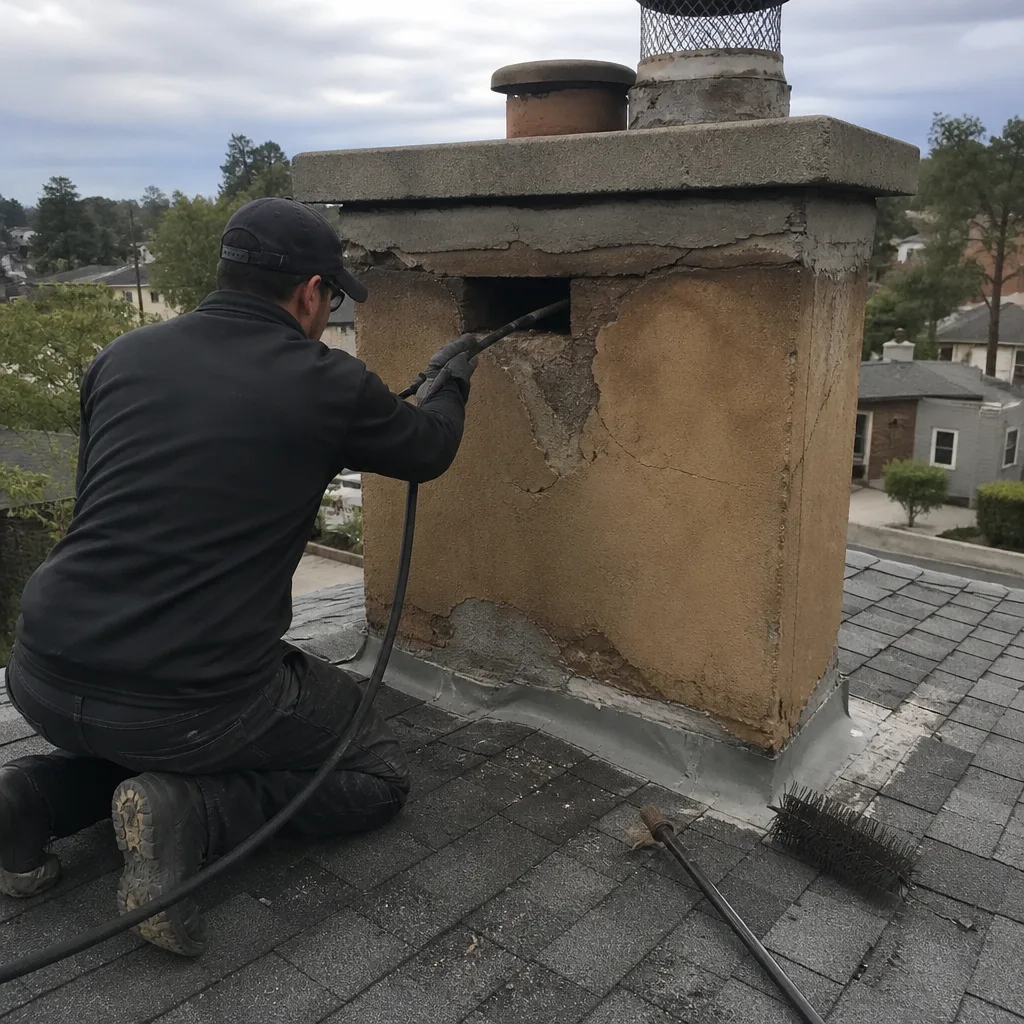 Before
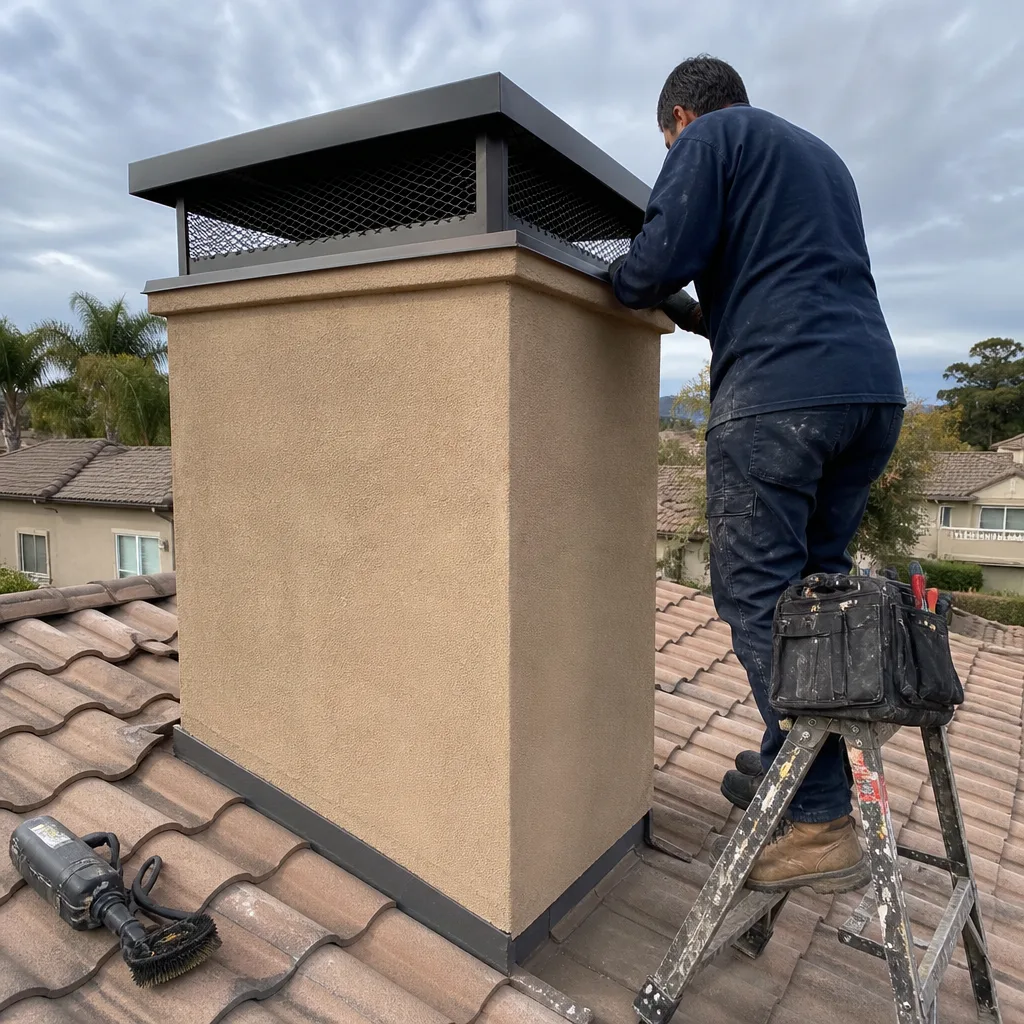 After
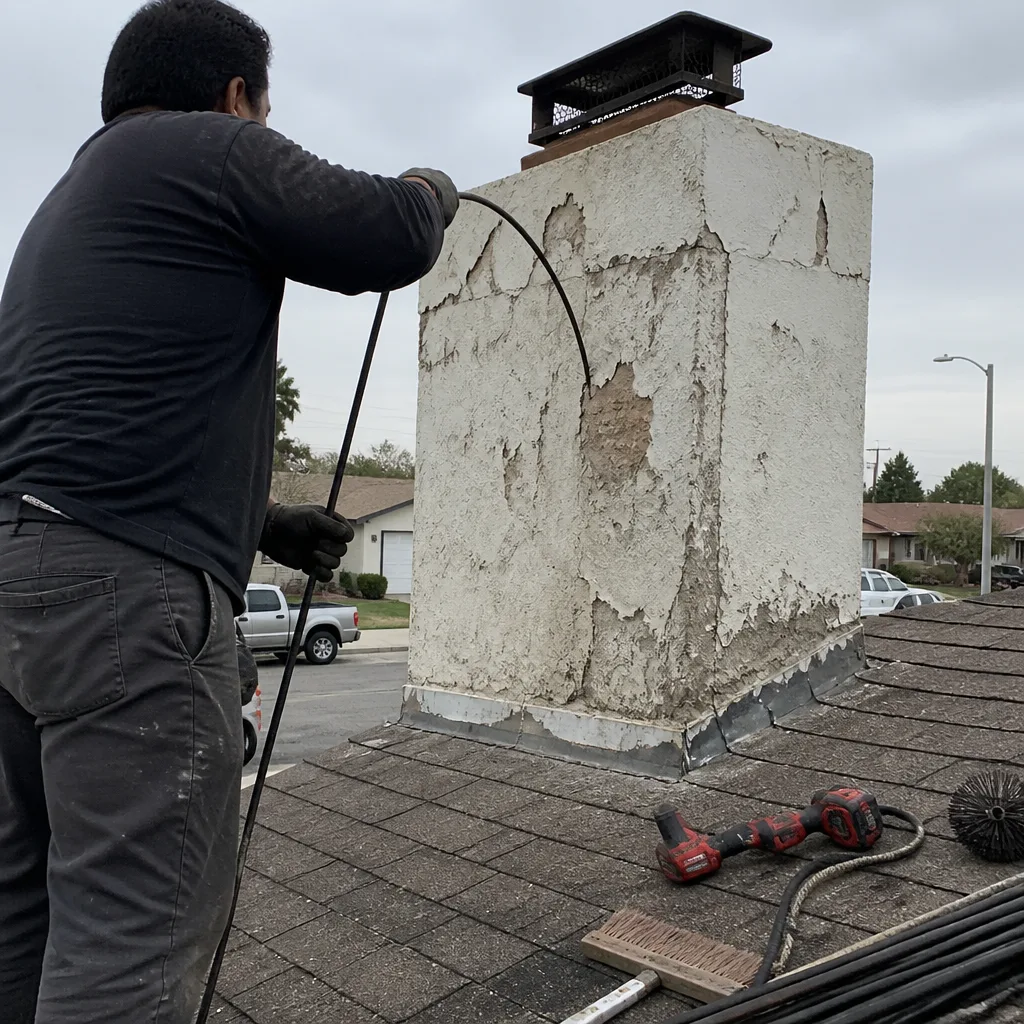 Before
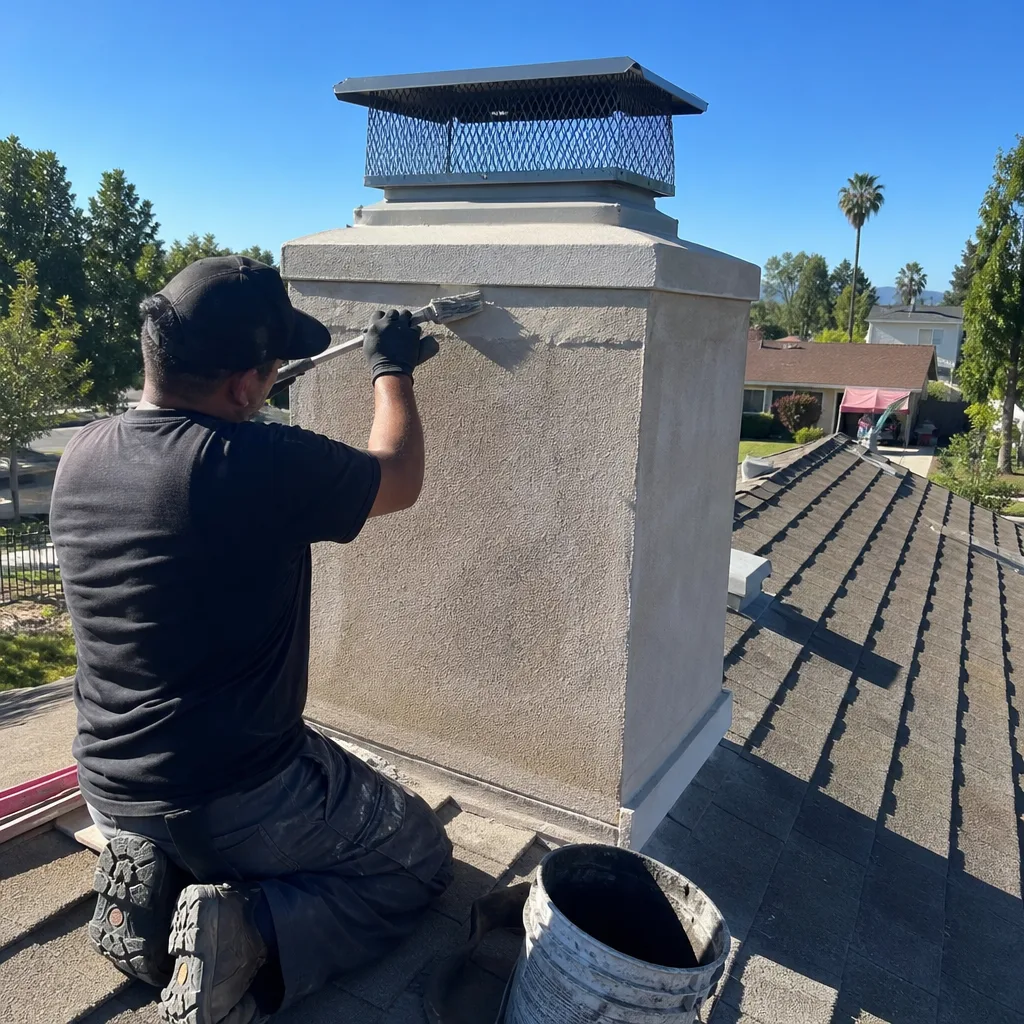 After
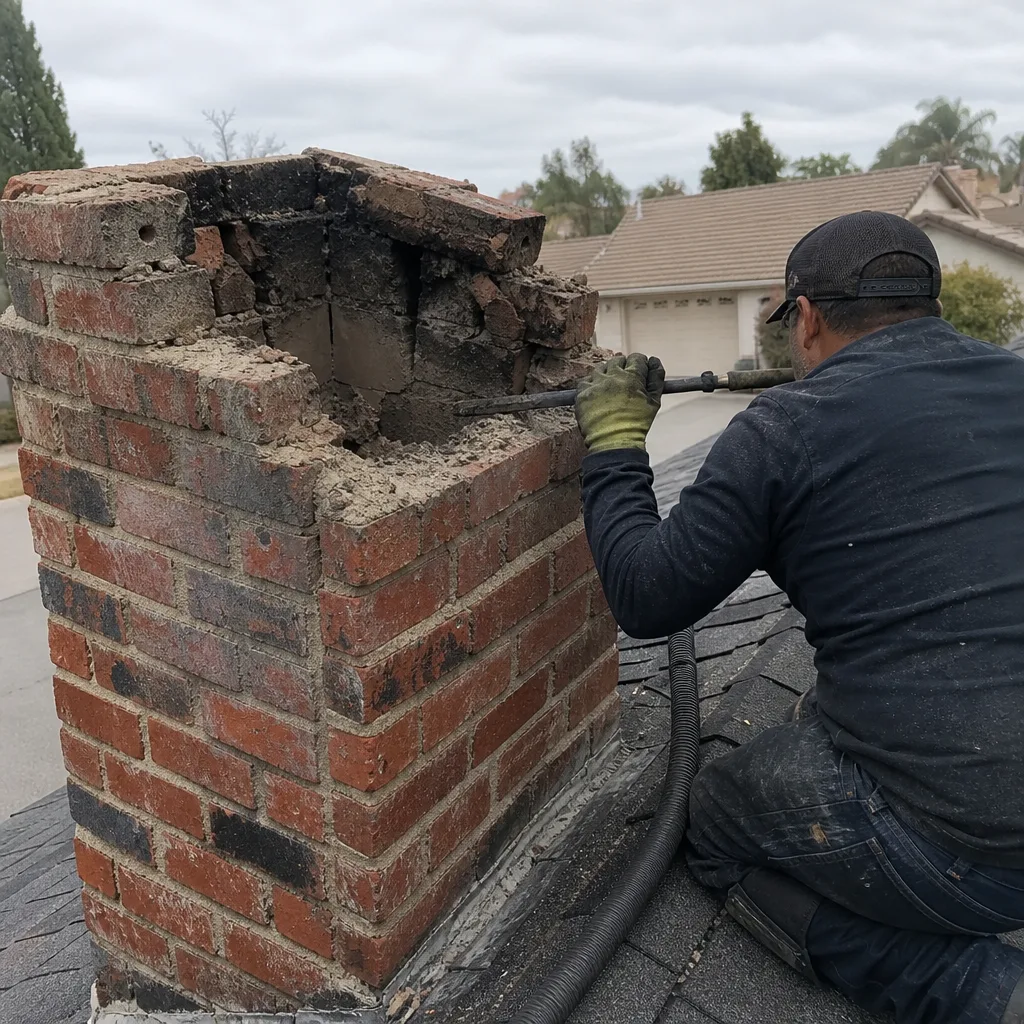 Before
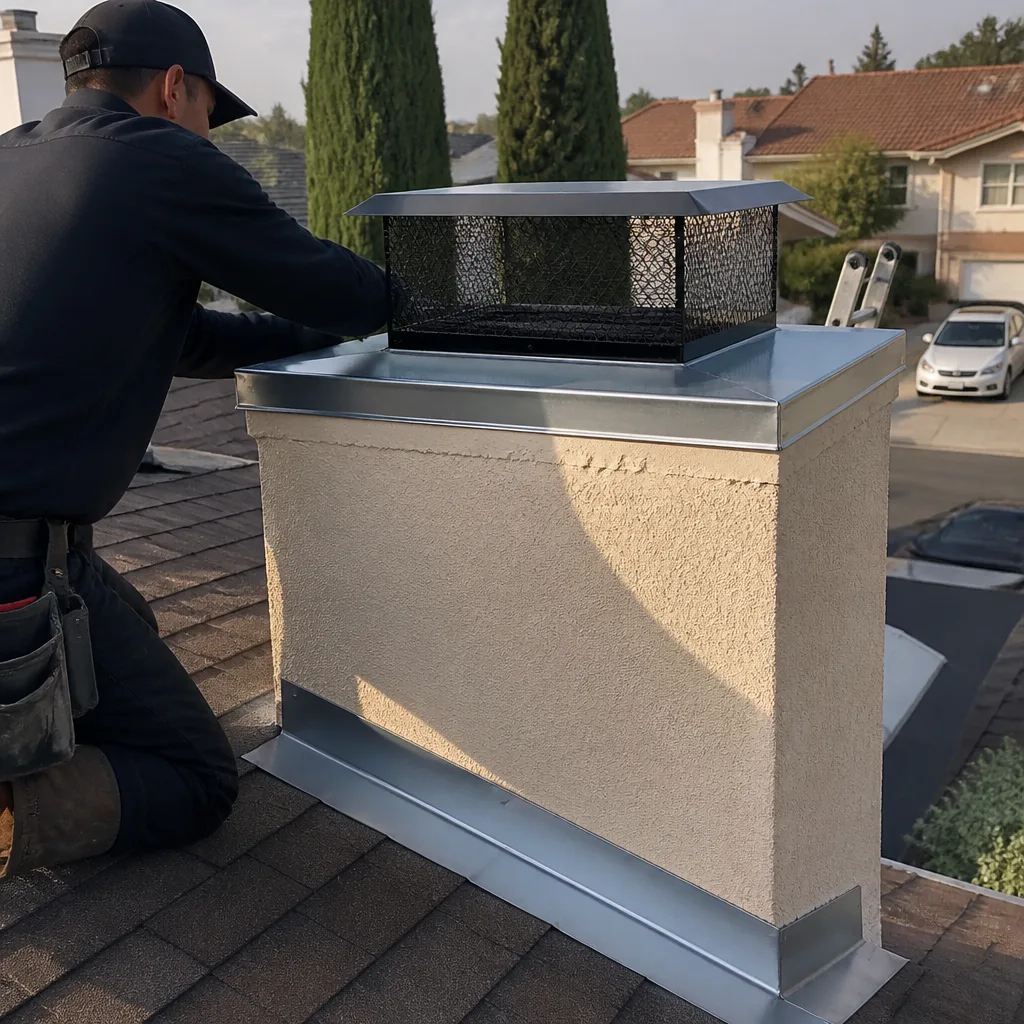 After
When a Professional Can Actually Save You Money
We’ve covered when DIY makes sense and when it doesn’t. Here’s the scenario most Fontana homeowners don’t consider: the professional who finds a problem early saves you money. A cracked clay tile liner caught during an annual inspection can sometimes be repaired. The same crack left undetected for three more seasons becomes a full liner replacement. A damaged cap caught early is a $200 repair. The water damage it prevents over two Fontana rainy seasons is a $3,000 masonry job.
The repair side is where the full-service scope matters. Most sweep-only companies can identify a cracked liner and refer you to someone else. At Ashwood’s chimney repair service, we handle the full sequence: identify the problem on camera, recommend the right repair, and do the work with professional-trade materials. When a liner is deteriorating but not destroyed, we use HeatShield restoration, a specialist-grade product that repairs cracked or spalled flue liners without full demolition or replacement. This is a repair option most sweep-only companies cannot provide, because they don’t stock the materials or carry the training. When a liner does need replacement, we install DuraFlex flexible liner systems, sourced through professional supply channels that don’t sell to retail consumers. These are the same materials certified chimney contractors specify nationwide, not bargain-bin substitutes.
The through-line: clean, inspect, repair, in one call. One contractor handles assessment and repair. No hand-off to a separate crew, no broken telephone between the inspector and the person doing the work. When a Fontana homeowner calls Ashwood Chimney Sweep, the same team that finds the problem fixes the problem.
When to Call a Professional
Call a professional if any of these apply: you haven’t had a camera inspection in over two years, you see shiny black glaze on the firebox walls, you smell smoke or creosote when the fireplace is cold, you’ve had a chimney fire in the past, you’re buying or selling a home in Fontana, or you’re switching from gas back to wood and need the flue evaluated. You should also call if you’ve been doing your own cleaning and realize you’ve never actually seen the upper liner. Ashwood Chimney Sweep offers free estimates in Fontana. Call (833) 805-3229 to schedule a sweep and inspection.
Frequently Asked Questions
A standard chimney sweep and inspection in Fontana typically runs between $150 and $300 for an open wood-burning fireplace, depending on flue condition and access. Gas fireplaces run slightly less. Repairs discovered during the inspection are quoted separately. Call (833) 805-3229 for an exact quote, estimates are free.
The National Fire Protection Association recommends annual inspection and cleaning as needed for any chimney in regular use. For Fontana homes with seasonal wood-burning use, that means once per year minimum, ideally before the burning season starts in late September or October. Homes used more heavily, or burning unseasoned wood, may need a mid-season cleaning.
Chimney cleaning logs can loosen first-stage creosote and make it easier to remove, but they are not a substitute for mechanical cleaning or inspection. They do not reach the upper flue, they do not evaluate liner condition, and they do not document anything for insurance purposes. Think of them as a maintenance supplement, not a replacement.
Not necessarily. Small cracks and early-stage deterioration can often be repaired with HeatShield restoration, which we offer at Ashwood Chimney Sweep as an alternative to full liner replacement. The only way to know is a camera inspection. If a company tells you the liner needs replacement without showing you camera footage of the damage, get a second opinion. Nothing is recommended without evidence you can see.
Creosote accumulates, hardens into glaze, and creates a fuel load inside the flue. The chimney becomes a fire risk. Simultaneously, undetected liner cracks let heat and gases escape into the home structure. By the time you notice a problem, whether it’s a chimney fire or a CO detector going off, the repair is far more expensive than the maintenance would have been.
Yes. Both are enclosed exhaust systems that accumulate combustible material. A clogged dryer vent in a Fontana home with a long vent run is a fire risk comparable to a dirty chimney. We treat dryer vent cleaning as a fire-safety service on equal footing with chimney work, and we recommend having both checked at the same time.
Cleaning Is Not the Same as Knowing
Here’s the honest summation for Fontana homeowners evaluating this decision. A brush removes soot. A camera tells you whether the chimney is safe. Those are different products. You can do the first yourself for $40. The second requires equipment that costs thousands, training that takes years, and access to professional channels for any repair that follows. The question isn’t whether you’re capable of pushing a brush. It’s whether you want to know what’s actually happening inside your flue, documented, before you light the first fire of the season. For that, call (833) 805-3229 and book a professional sweep. Your chimney gets clean, your liner gets looked at, and you get a written record that holds up if anything ever goes wrong.
The Bottom Line
DIY chimney cleaning in Fontana is a maintenance supplement, not a replacement for professional service. A homeowner can clear ash, check the cap from the ground, and test draft safely. The actual cleaning of the flue, the removal of dangerous second and third-stage creosote, and the camera evaluation of the liner require professional equipment and training. The annual cost of professional service is modest compared to the cost of a chimney fire, an insurance denial, or a major liner repair. Do the light maintenance yourself. Leave the flue to someone with a camera and the training to read it. Your fireplace, your insurance company, and your family’s safety all get a better outcome.
Written by the team at Ashwood Chimney Sweep, serving Fontana since 2012.