Last updated October 30, 2026
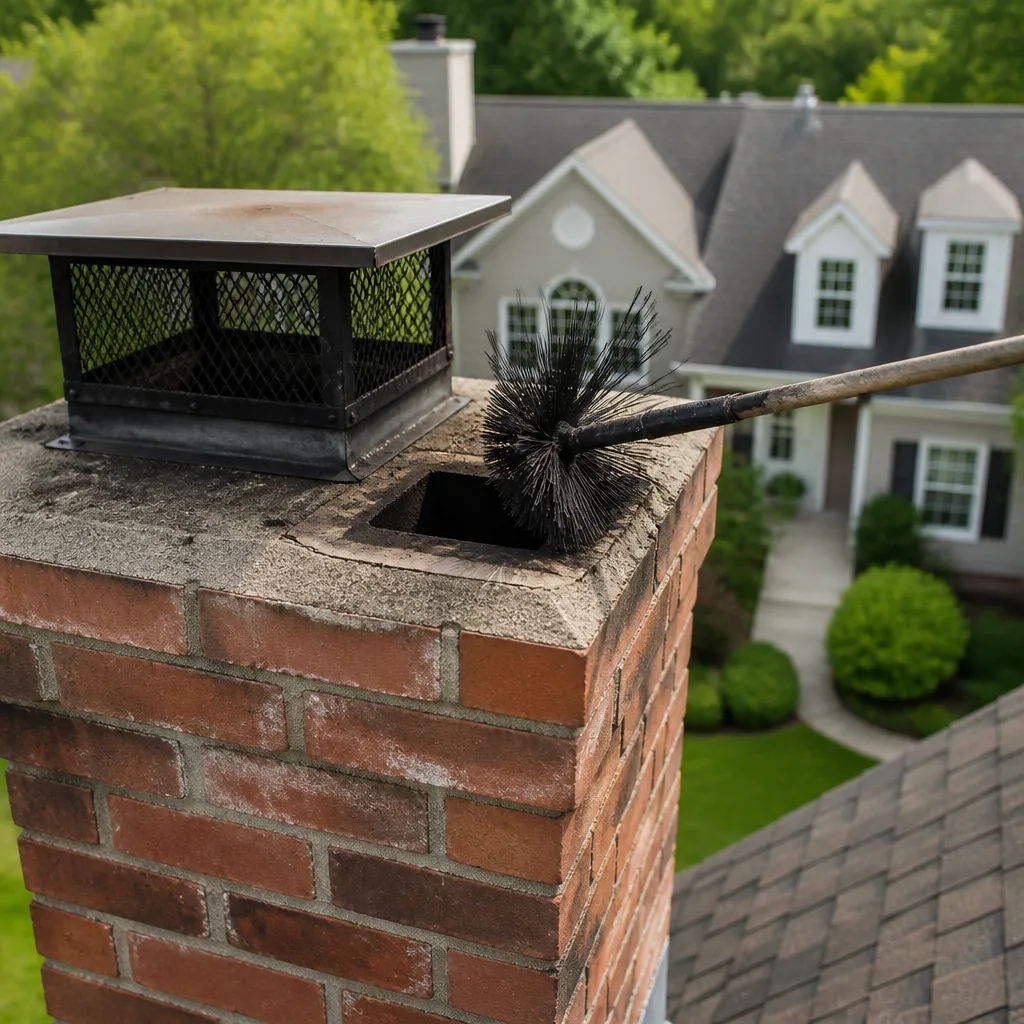 Sweep & inspection
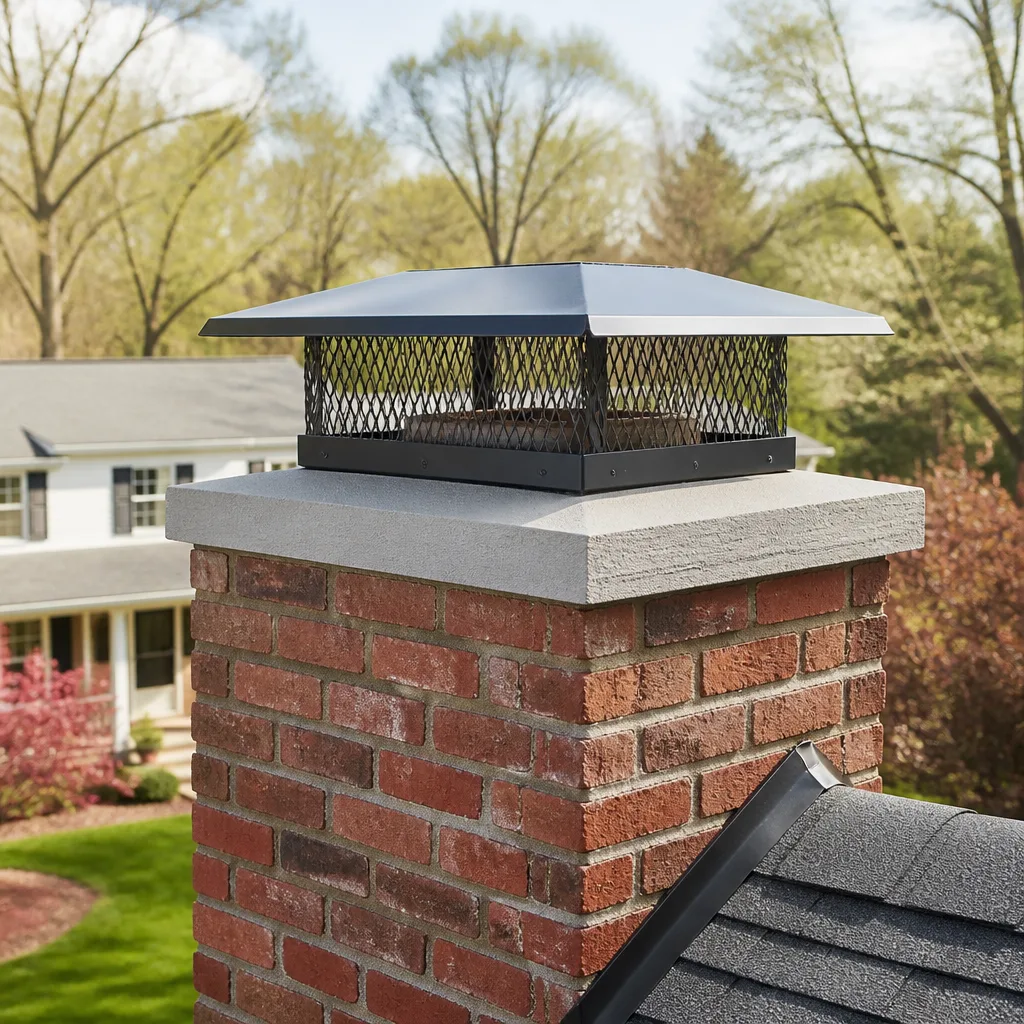 Caps & crowns
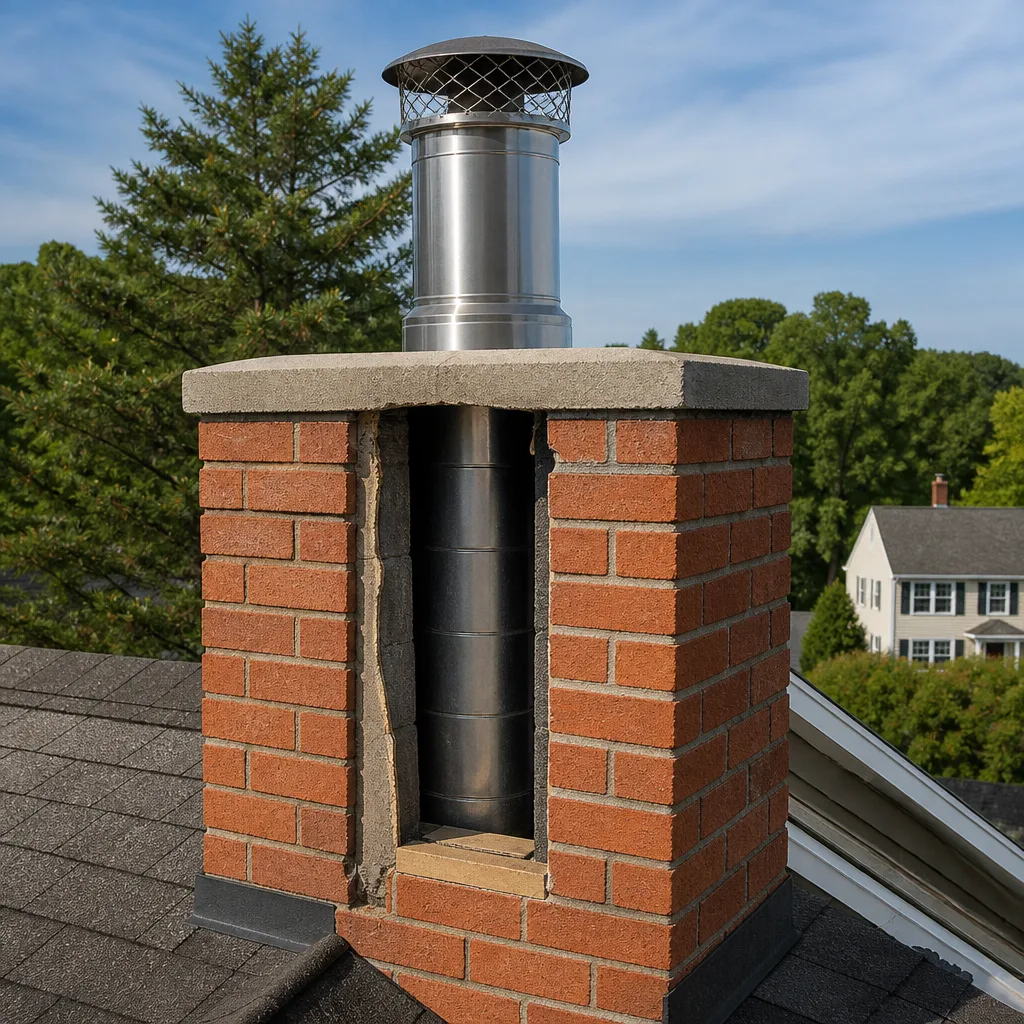 Flue relining
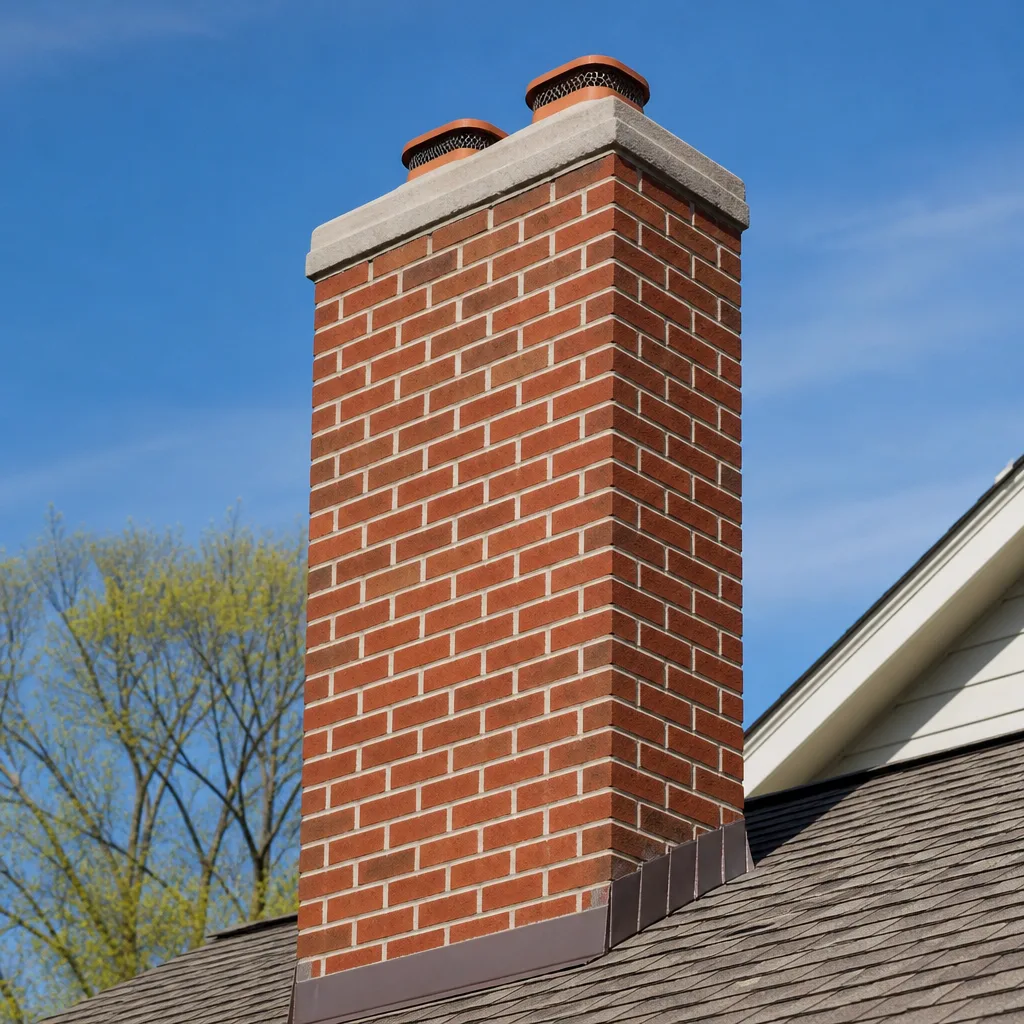 Masonry repair
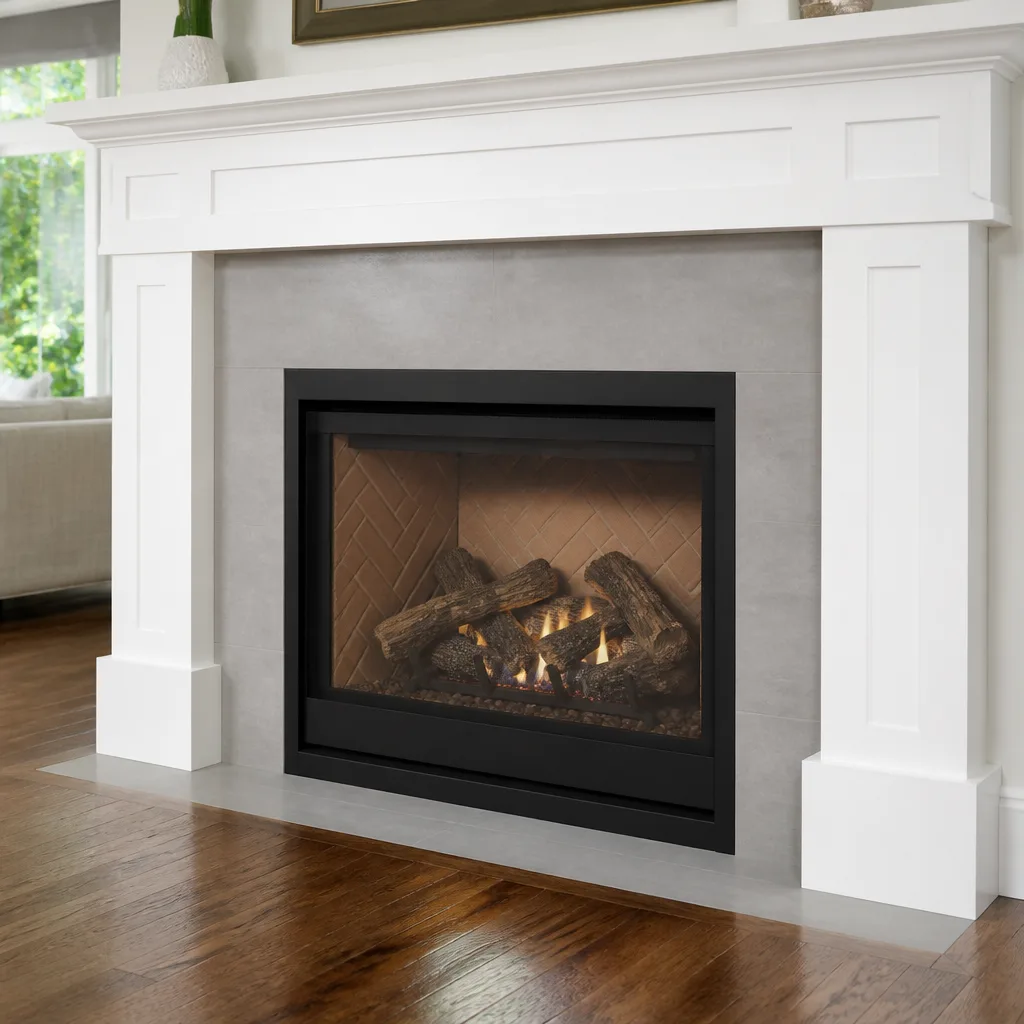 Gas fireplace service
Level 1 sweep and inspection to the NFPA 211 annual standard - flue, crown, cap, and flashing checked and photographed
Chimney sweep logs do not sweep chimneys. They loosen some creosote - which then falls where a brush and vacuum still have to collect it.
Chimney Sweep Troubleshooting: Common Problems and How to Fix Them
A smoky firebox isn’t always a dirty flue. In Fontana, where winter nights dip into the 40s and fireplaces become daily-use appliances from November through March, we see homeowners spend money on sweeping only to have the same smoke-backing-into-the-house problem the very next weekend. The truth is that chimney symptoms rarely map to a single cause. What looks like a blockage might be a pressure problem in the house. What smells like creosote might be a cracked flue liner. This guide walks you through a diagnostic order of operations we’ve developed over years of troubleshooting chimneys across Fontana, from Southridge to Etiwanda. You’ll learn how to rule out the simple causes first, recognize which smells are urgent, and know when a problem is safe to wait on versus when the fireplace should stay cold until a professional gets there.
Quick Answer
When smoke backs into your house or you notice unusual odors from your fireplace, the cause is rarely just one thing. The most common culprits are negative air pressure inside the home, a cold flue that won’t establish draft, creosote buildup, or structural damage to the cap, crown, or liner. Work through this guide’s diagnostic order: check house pressure first, test the flue’s warm-up time, then examine what the smell is telling you. If a 10-minute warm-up test fails or you smell sulfur or sharp tar, stop using the fireplace and call a professional.
Styles & brands we work with
Table of Contents
- 1. Start Here: Negative Air Pressure and Why It Mimics a Dirty Chimney
- 2. The Cold-Flue Warm-Up Test: 10 Minutes That Saves a Sweep Call
- 3. What That Smell Actually Means: Campfire, Tar, and Sulfur Decoded
- 4. Why a Freshly Swept Chimney Still Backdrafts
- 5. Creosote: The Silent Variable That Changes Everything
- 6. Dryer Vents: The Chimney Problem Hiding in Your Laundry Room
- 7. Schedule Soon vs. Stop Using It Now: A Clear Decision Framework
- 8. Flue Liners in Fontana Homes: What Age and Climate Do to Them
1. Start Here: Negative Air Pressure and Why It Mimics a Dirty Chimney
Before you assume your chimney is clogged, rule out the house itself. Negative air pressure is the single most common cause of smoke backing into a room that we encounter in Fontana homes, especially newer construction with tight building envelopes. Here’s what happens: when a fire burns, it draws air from the room to feed the flames, and that air goes up the flue. If the house can’t pull replacement air in from outside fast enough, the pressure inside drops. The chimney then becomes the easiest path for outside air to rush in, and it brings smoke with it.
What creates negative pressure? Several things, often working together:
- Kitchen or bathroom exhaust fans running during a fire. A powerful range hood can pull 400 to 1,200 cubic feet per minute out of a house.
- A furnace or water heater competing for combustion air. If they’re in the same room or nearby, they’re stealing the air your fire needs.
- Tight windows and modern weather sealing. Fontana homes built or renovated in the last 20 years often seal up so well that there’s simply no makeup air source.
- A clothes dryer running during a fire. Dryers exhaust hundreds of CFM and can easily tip a borderline room into negative pressure.
How to test for this at home: open the nearest window about two inches before you light the fire and leave it open for the first 10 minutes of burning. If the smoke problem disappears, the chimney was never the issue. The house needs a source of combustion air. In our experience, roughly one in four “chimney problems” we diagnose in Fontana turns out to be a house-pressure issue that no amount of sweeping would have fixed. The chimney was working as designed. The house just wasn’t giving it what it needed.
This is the first diagnostic step because it’s free, takes minutes, and prevents spending money on a cleaning that won’t change anything. If you open a window and the problem persists, then you move to the flue itself.
2. The Cold-Flue Warm-Up Test: 10 Minutes That Saves a Sweep Call
A cold flue is a stubborn flue. Here’s the simple physics: warm air rises, cold air sinks. In Fontana’s winter, your chimney flue is often the same temperature as the 45-degree air outside. When you light a fire, the smoke wants to rise, but it hits a column of cold, dense air sitting in the flue. That cold air has to be heated and displaced before draft can establish, and until it does, smoke spills into the room.
The test is straightforward and takes about 10 minutes:
- Before lighting anything, open the damper fully and place your hand at the firebox opening. If you feel cold air falling onto your hand, the flue is full of cold air and will resist drafting.
- Crumple a few sheets of newspaper and hold them up inside the firebox, near the open damper. Light them.
- Watch what the smoke does. If the smoke wavers, spills into the room, or you feel air pushing back against your hand, the cold flue hasn’t warmed yet.
- Keep feeding small amounts of newspaper for 5 to 10 minutes. You’re not building a real fire yet, you’re just heating the air column in the flue.
- When the smoke starts pulling up cleanly and steadily, add small kindling. If it still spills after 10 minutes of warming, the problem is likely not temperature. Move to blockage or structural causes.
This test distinguishes a cold-flue draft problem from a structural obstruction in minutes. A cold flue fixes itself as the chimney warms. A blockage doesn’t care how warm it gets. If the warm-up test fails, the next thing to consider is what’s physically inside the flue: creosote buildup, animal nesting, a collapsed liner section, or a damper that isn’t opening fully. Cap damage and crown issues can also restrict airflow at the top, not the bottom. Those are “schedule soon” issues, not “sell the house” issues, but they need to be assessed with a camera if the warm-up test points that direction.
3. What That Smell Actually Means: Campfire, Tar, and Sulfur Decoded
Your nose is a diagnostic tool, but only if you know what each smell indicates. Here’s what we’ve learned from thousands of chimney inspections in Fontana and the Inland Empire: the smell coming from your fireplace is often more informative than anything you can see. Three main smells matter, and they point to different problems with different urgency levels.
Campfire smell (smoky, like a wood fire that’s gone out): This is the most common odor and least alarming. It’s usually creosote residue absorbing moisture from humid air or rain, then releasing that smell into the room. In Fontana, this often happens after Santa Ana winds shift humidity or when rain follows a dry spell. The fix is usually a cleaning, though the timing depends on how much creosote has accumulated. A campfire smell in winter, right after you’ve had fires, is normal. A campfire smell in August, with no recent fires, suggests a moisture problem: cracked crown, damaged cap, or missing chimney cover.
Tar or asphalt smell (sharp, chemical, almost like roadwork): This indicates glazed or stage-three creosote, which forms when fires burn hot and fast, or when unseasoned wood is used consistently. Tar smell means the creosote has cooked into a hard, glassy coating on the flue walls. This is the most fire-hazardous buildup type. A standard brush sweep won’t remove all of it. This smell in your home means you should schedule a professional inspection soon, and you should avoid long, hot fires until it’s addressed.
Sulfur or rotten-egg smell (sharp, distinct, unpleasant): This is the one that means stop using the fireplace until a professional looks at it. Sulfur smells in a chimney context usually indicate that exhaust gases from a gas appliance, often a water heater or furnace venting through a shared flue, are not drafting properly. It can also indicate chimney blockage severe enough that combustion gases are spilling into the living space. Carbon monoxide is odorless, but the sulfur compounds accompanying incomplete combustion are not. If you smell sulfur, extinguish any fire, ventilate the room, and get a pro out. This is not a wait-and-see situation.
4. Why a Freshly Swept Chimney Still Backdrafts
Here’s a scenario we hear regularly in Fontana: a homeowner pays for a chimney sweep, gets a clean bill, lights a fire the next weekend, and smoke pours into the living room. For a deeper look at what professional sweeping should include, see our Complete Chimney Sweep Guide for Fontana Homeowners. They assume the sweep missed something. Usually, the sweep did exactly what was asked. The problem is that cleaning only removes creosote. It doesn’t fix draft, and it doesn’t address structural issues. Three non-cleanliness causes account for most post-sweep backdrafting:
Damaged or missing chimney cap. The cap sits at the top of the flue and does two jobs: keeps rain and animals out, and helps direct airflow across the flue opening. A cap that’s rusted through, loose, or blown off by Santa Ana winds changes the pressure at the flue mouth. Air doesn’t exit cleanly, and backdrafting results. In Fontana, where winds routinely hit 40 mph in the fall, cap damage is one of the most common non-cleaning issues we repair.
Crown cracking. The crown is the concrete slab at the top of the chimney that seals between the flue and the brick. When Fontana’s summer heat expands it and winter cold contracts it, micro-cracks form. Water gets in, freezes occasionally, and the cracks widen. A cracking crown pulls the flue slightly out of alignment and lets outside air into the system at the wrong point, disrupting draft. It also accelerates liner deterioration. The crown issue rarely gets attention during a standard sweep because it’s not visible from inside the house.
Improper liner sizing. This one surprises people. If the flue liner was originally sized for a larger fireplace or a different appliance, and the fireplace has been replaced or the damper changed, the draft dynamics shift. Too large a flue doesn’t heat up fast enough and won’t pull smoke efficiently. Too small a flue chokes the fire. Liner sizing is a design issue that no amount of sweeping fixes. It requires measuring the flue, assessing the appliance, and often resizing with a properly fitted liner system.
If you’ve had a sweep and the smoke problem persists, the cleaning was never the issue. The next step is a camera inspection of the cap, crown, and liner, in that order. We handle these as part of our Chimney Repair in Fontana work, and the camera findings tell you exactly which part is failing.
5. Creosote: The Silent Variable That Changes Everything
Creosote buildup is the most cited chimney problem and the least understood. It’s not one substance; it’s a family of deposits that form in three distinct stages, each requiring a different removal method and each presenting a different fire risk level. Understanding which stage you’re dealing with changes what you should do next.
Stage one creosote is flaky, dusty, and brown to dark gray. It brushes off easily with standard sweeping equipment. This is what most fireplaces develop after one season of regular use with properly seasoned wood. It’s normal and manageable.
Stage two creosote is crunchy, tar-like, and harder. It forms when fires burn at medium temperatures or when some unseasoned wood gets into the mix. A standard brush removes most of it, but patches may resist. This accumulation raises fire risk and should be addressed before heavy winter use. In Fontana, where fire season overlaps with Santa Ana wind season, any stage-two creosote is worth addressing before November.
Stage three creosote is the serious one. It’s a hard, glossy, tar-coating that looks like melted plastic inside the flue. It forms when fires burn hot and fast, or when people consistently burn green wood, cardboard, or treated lumber. Stage three creosote doesn’t brush off. It can fuel a chimney fire that reaches 2,000 degrees Fahrenheit, hot enough to crack flue tiles and ignite surrounding framing. Removal often requires chemical treatment or mechanical remediation. This is also where restoration products like HeatShield come in, because a chimney that’s experienced a creosote fire often has damaged tile liners that need repair, not just cleaning.
The variable that matters most for Fontana homeowners is wood quality. The Inland Empire has a ready supply of fruit tree wood from local orchards, and citrus and avocado wood is excellent, but only if it’s been seasoned at least 12 months. Green wood is the single biggest contributor to fast creosote accumulation we see across Fontana, Rancho Cucamonga, and Ontario.
6. Dryer Vents: The Chimney Problem Hiding in Your Laundry Room
Here’s a connection most homeowners don’t make: the dryer vent is a chimney. It exhausts hot, lint-laden air from the laundry room to the outside, and it operates on the same draft principles as a fireplace flue. The difference is that nobody thinks about it until something goes wrong. By the time something goes wrong, it’s often too late.
A clogged dryer vent is not a minor inconvenience. Lint is highly combustible, and the combination of restricted airflow, accumulated lint, and the dryer’s heating element creates conditions for a fire. According to data from the U.S. Fire Administration, dryer fires account for roughly 2,900 residential fires annually. Many of those are traceable to vents that were never cleaned or were improperly routed. In Fontana’s dry climate, lint dries out fast and becomes even more flammable.
Signs that your dryer vent needs attention:
- Longer drying times. Clothes that used to dry in 40 minutes now take 60 or more. This is the first sign of restricted airflow.
- The dryer exterior feels unusually hot or the laundry room heats up more than it used to during a cycle.
- A burning smell during operation. This is urgent. Stop using the dryer and get it inspected.
- The outside vent flap doesn’t open or you can’t feel air being pushed out when the dryer runs.
- Visible lint accumulation around the vent opening or on the wall behind the dryer.
Dryer vent cleaning is not a task to defer. We treat it as a serious fire-safety service, not an add-on to chimney work. Your dryer vent is a fire-risk system, not an afterthought. The good news is that professional cleaning removes the lint, restores airflow, and usually resolves the longer-drying-time problem immediately. We stock ventilation components from Famco, manufactured hardware rather than improvised fixes, because the quality of the replacement parts matters as much as the cleaning itself. This is part of our Dryer Vent Cleaning in Fontana service, and it’s covered under the same careful inspection standard we apply to chimneys.
7. Schedule Soon vs. Stop Using It Now: A Clear Decision Framework
Not every chimney symptom is an emergency, and knowing which is which saves you money, stress, and potentially your house. Here’s our decision framework based on what we’ve seen across hundreds of Fontana chimneys.
Stop using the fireplace immediately if:
- You smell sulfur or rotten eggs. This indicates possible combustion gas spillage, and carbon monoxide may be present.
- You see smoke actively flowing into the room despite the warm-up test and an open window. This suggests significant blockage or structural failure.
- You hear a roaring sound from the chimney during a fire, like a freight train. That’s a chimney fire. Close the damper if you can do so safely, call 911, and evacuate.
- You’ve had a chimney fire and haven’t had the flue inspected since. Chimney fires crack liners and damage the structure even when they burn themselves out.
- You notice bricks cracking, spalling, or falling from the chimney exterior. This indicates structural movement that could affect the flue’s integrity.
Schedule soon (within a few weeks) if:
- You smell a campfire odor in summer with no recent fires. This points to moisture intrusion, likely from a damaged cap or crown.
- Your fires produce more smoke than usual but the warm-up test temporarily resolves it. This suggests creosote buildup at a moderate level.
- The chimney cap is visibly rusted, missing, or tilted.
- Your dryer takes noticeably longer than it used to, or the vent flap doesn’t open fully.
- You can’t remember the last time the chimney was swept, and you’ve used the fireplace regularly for more than one season.
The rule of thumb: sulfur smell, active smoke backflow, or roaring sounds mean stop and get a professional out. Campfire smell, slow drying, or visible rust mean schedule within the month. When you call, describe the symptoms precisely. The person on the phone should be able to tell you whether it’s a stop-now or a schedule-soon situation, and if they can’t, that tells you something about who you’re dealing with.
8. Flue Liners in Fontana Homes: What Age and Climate Do to Them
Flue liners are the unseen component that determines whether your chimney is safe to use, and they fail in predictable ways in Fontana’s climate. Homes built before 1980 often have clay tile liners, which last 50 to 70 years under ideal conditions. Fontana’s temperature swings, with summer highs above 100 and winter nights below 50, accelerate tile deterioration. Add Santa Ana wind-driven debris and the occasional seismic shift, and liners in 40-year-old Fontana homes are often reaching the end of their service life.
What failure looks like: cracked tiles, spalled tile faces, gaps between tile sections, or missing mortar joints. These allow heat and combustion gases to reach the brick structure around the flue, and in worst cases, reach wall framing. A cracked liner doesn’t announce itself with a smell or a smoke problem. It sits there quietly until an inspection with a camera reveals it.
This is where material choice matters. Traditional repair means full liner replacement, which involves breaking out the old tiles and either rebuilding or relining. That’s expensive and invasive. We use HeatShield liner restoration when the damage is caught early enough, a specialist-grade product that repairs cracked or spalled flue liners without full demolition. If a liner is beyond restoration, we install DuraFlex flexible liner systems, stocked and certified for professional installation, not a retail-available product. Both approaches give you a flue that’s safe to use again. The difference is that HeatShield lets us restore it, not just document the problem and hand you a demolition quote.
If your home is original-construction from the 1970s or earlier and the liner has never been inspected, that is a “schedule soon” priority. The inspection itself is quick. The camera tells us exactly what shape the liner is in, and we show you the images so you’re not taking anyone’s word for it. Nothing is recommended without camera evidence you can see for yourself.
Common Mistakes to Avoid
- Assuming smoke means dirty chimney and scheduling a sweep without testing for negative pressure. You’ll pay for the cleaning, light the next fire, and the smoke will be back. Open a window and run the warm-up test first.
- Burning green wood because it’s available. Green wood floods your flue with creosote. Season it 12 months minimum. Fontana has excellent fruit wood available, but only if it’s properly dried.
- Ignoring a campfire smell in summer. That smell is moisture in creosote, and moisture in creosote means water is getting in where it shouldn’t. Fix the cap or crown before the water damage spreads.
- Using the fireplace during Santa Ana wind events with a damaged cap. High winds plus a compromised cap equals unpredictable draft and increased burn risk. Wait for calm conditions and get the cap repaired.
- Treating the dryer vent as optional maintenance. A dryer vent fire doesn’t care that the chimney was just cleaned. Lint accumulation in the vent is its own hazard. Clean them both on a schedule.
- Re-sweeping repeatedly without asking why the creosote is building up so fast. If you’re getting significant creosote within one season, something is wrong with wood quality, burn habits, or draft. Find the root cause.
- Assuming a post-sweep backdraft means the sweep failed. Most post-sweep backdrafts come from cap, crown, or liner issues that cleaning doesn’t touch. Ask for a camera inspection, not another sweep.
See the difference
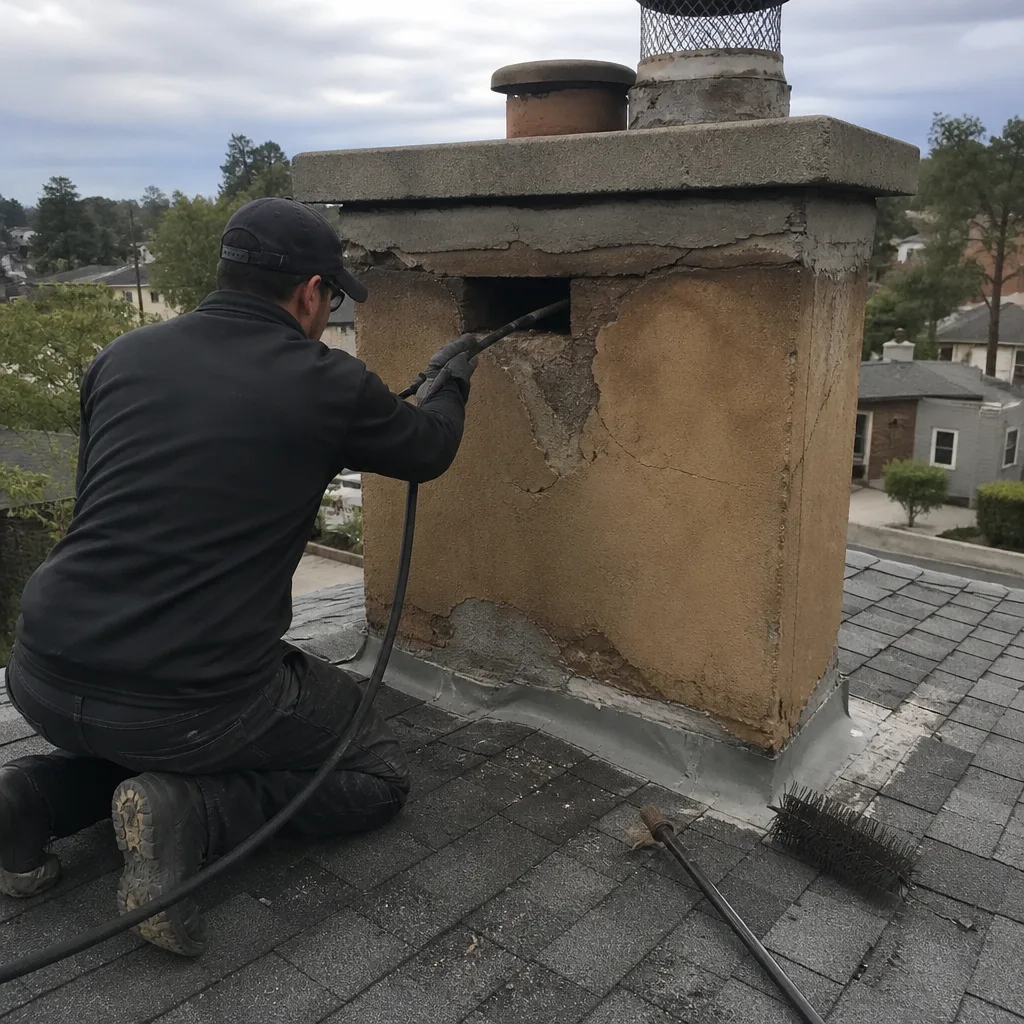 Before
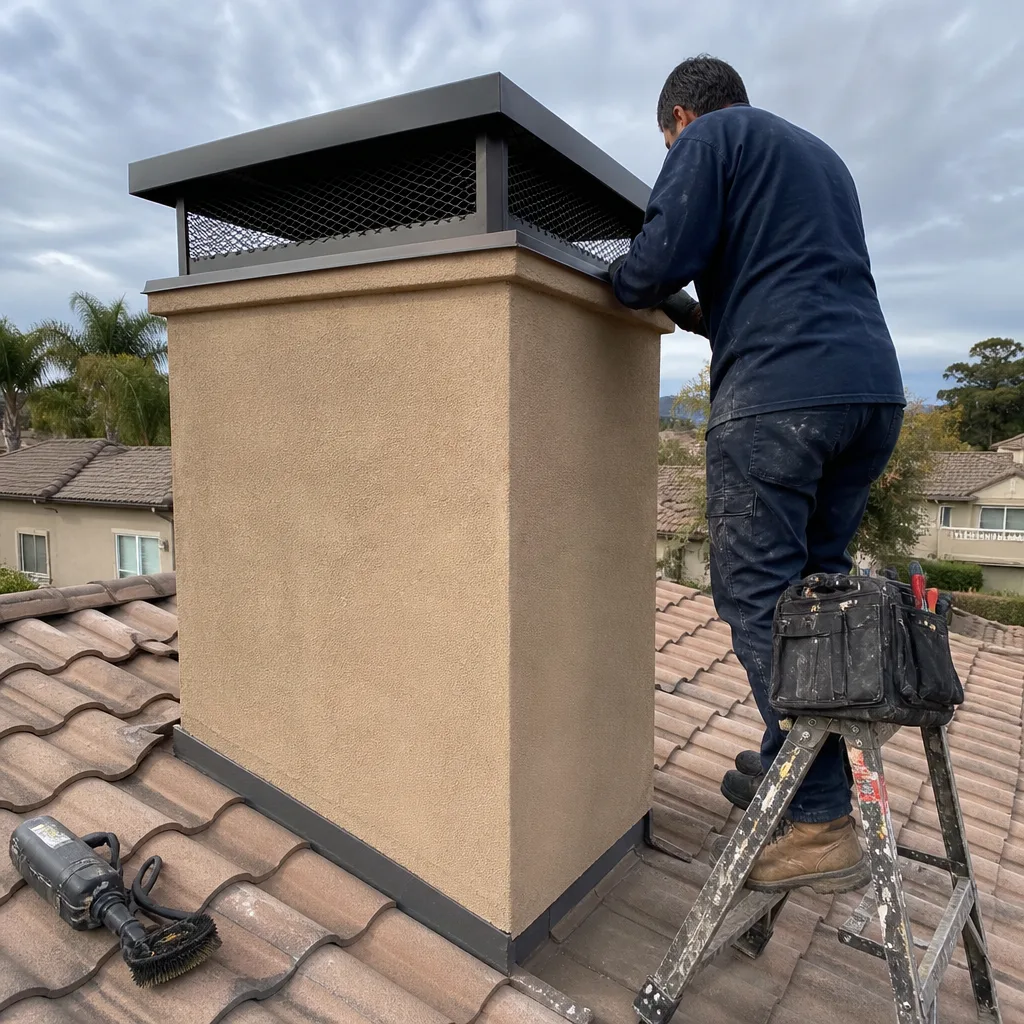 After
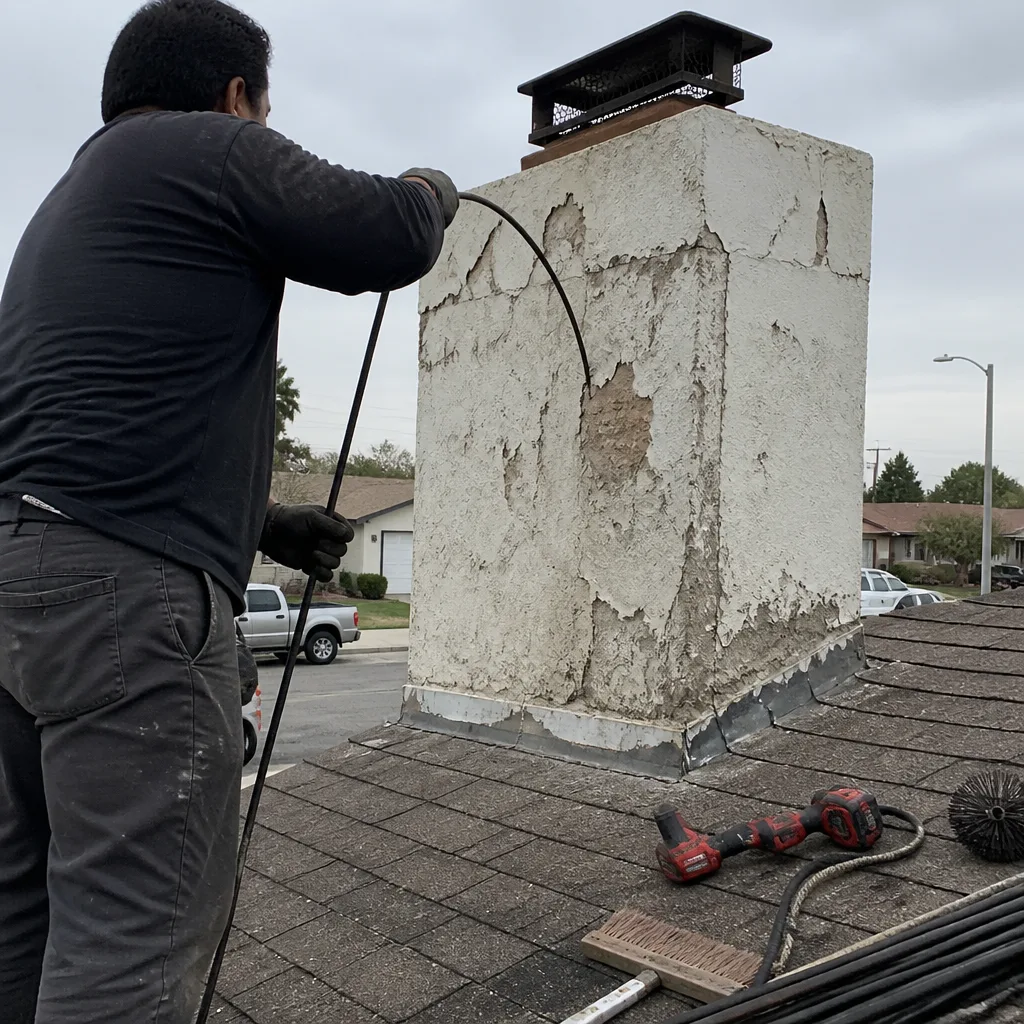 Before
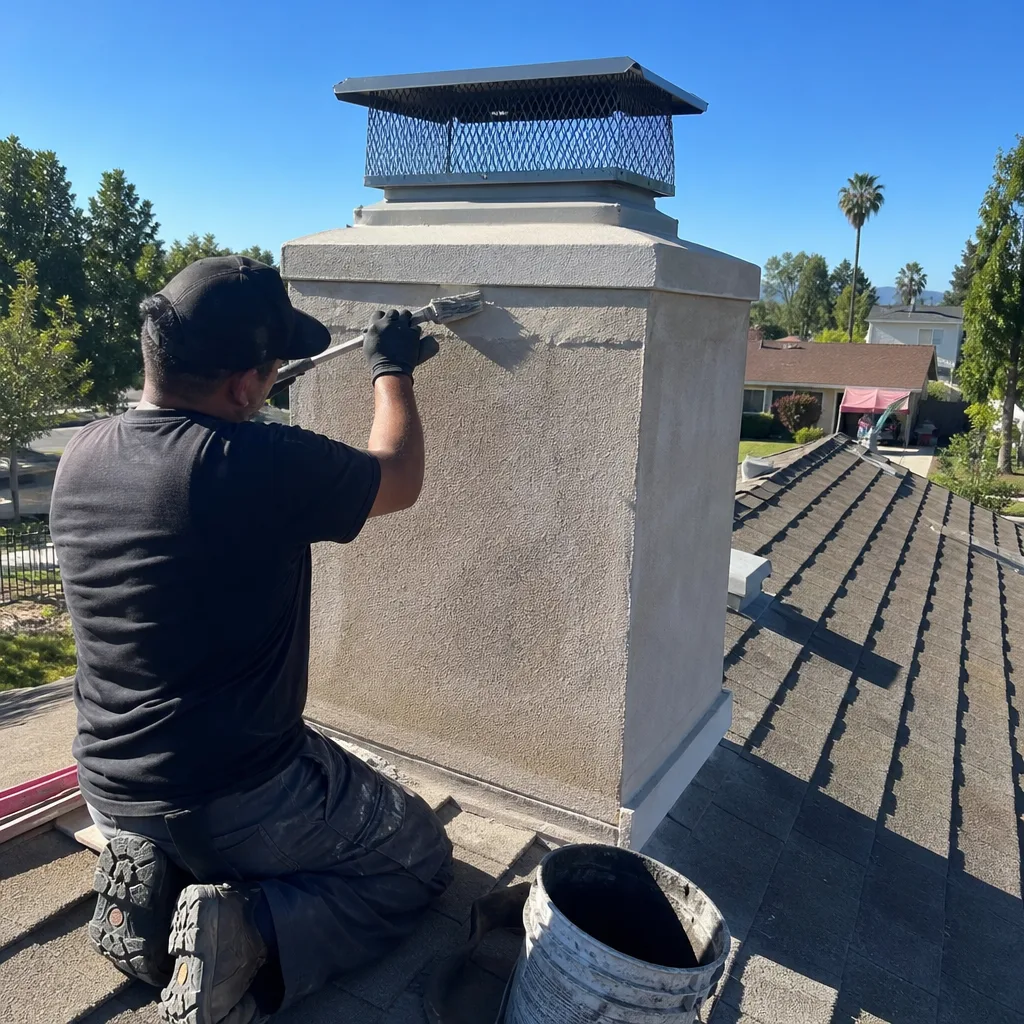 After
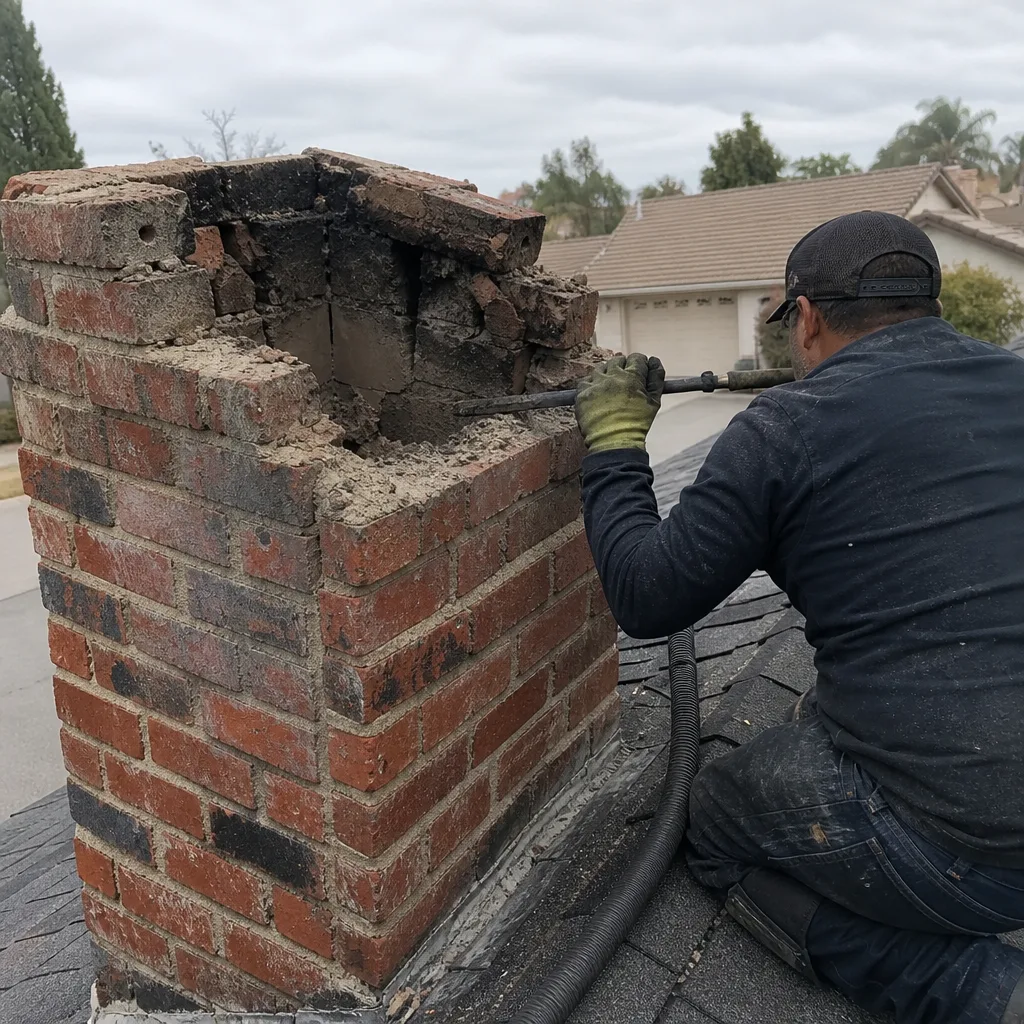 Before
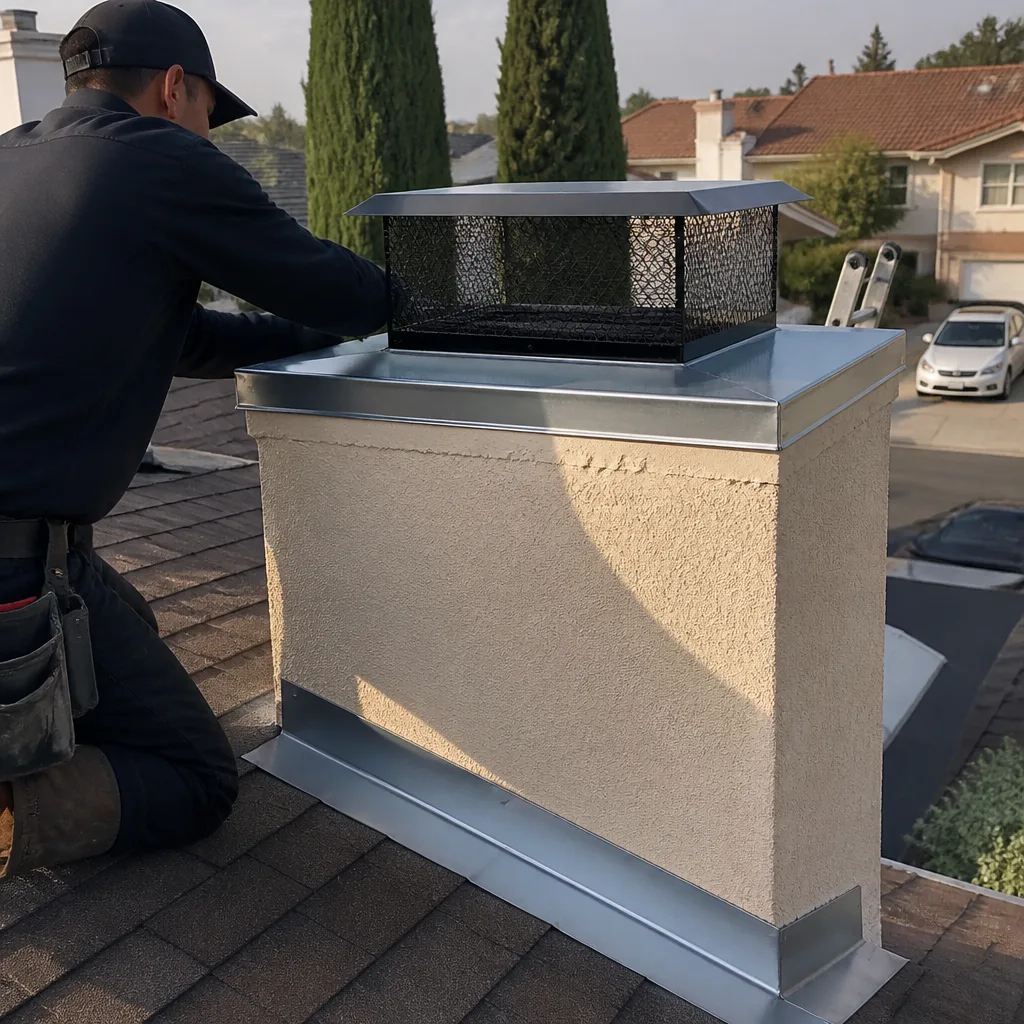 After
When to Call a Professional
You should call a professional when the warm-up test fails after a full 10 minutes, when you smell sulfur or sharp tar, when you’ve had a chimney fire regardless of how minor it seemed, or when your dryer vent shows signs of restricted airflow. You should also call when the problem is beyond what you can see: a cracked liner, a deteriorated crown, or a compromised cap all require eyes on the actual structure, usually with a camera. These are not guess-and-check situations. A professional assessment costs a fraction of what a chimney fire or carbon monoxide incident costs.
In Fontana, Ashwood Chimney Sweep home is your starting point for any of these issues. We offer free estimates and handle sweeping, dryer vent cleaning, and repair as one connected service, so you’re not coordinating three different contractors for three related problems. Call (833) 805-3229 to get on the schedule.
Frequently Asked Questions
Run the 10-minute warm-up test. If smoke spills initially but starts pulling cleanly after you feed newspaper for a few minutes, it’s a cold-flue draft issue, not dirty buildup. If smoke still spills after 10 minutes with an open window, the flue likely has creosote accumulation or a structural obstruction. We can camera-inspect it either way and tell you exactly what’s there. Call (833) 805-3229 for a free estimate in Fontana.
A chimney fire often sounds like a freight train or a low roar coming from the chimney, and it may be accompanied by visible flames shooting from the top. If you hear this, close the damper if you can do so safely, evacuate the house, and call 911. After any chimney fire, the flue must be inspected before further use. Fire can crack tiles and compromise the liner even if the exterior looks fine. We inspect post-fire chimneys regularly for Fontana homeowners.
A campfire smell with no fire burning usually means creosote is absorbing moisture from the air and releasing odor into the room. In Fontana, this commonly happens after rain or during humidity shifts. The fix is usually a cleaning, but the moisture source may also need addressing, such as a cracked crown or damaged cap. We can identify which during a standard inspection.
A damaged or missing cap doesn’t automatically make the fireplace unsafe, but it accelerates other problems. Rain gets in, animal nesting becomes possible, and draft becomes less predictable, especially during Santa Ana winds. We recommend scheduling a cap repair before the next heavy wind season, and until then, burn only small, hot fires with a window cracked open for makeup air.
The National Fire Protection Association recommends a sweep when creosote reaches one-eighth inch of accumulation, and inspection at least annually. For Fontana homeowners who burn regularly from November through March, an annual sweep before burning season is the practical standard. If you burn unseasoned wood or use the fireplace as a primary heat source, you may need more frequent attention. We’ll photograph the flue and show you exactly what the buildup looks like.
Our schedule in Fontana varies with the season, and fall is our busiest period. We work hard to accommodate urgent safety issues as quickly as possible. When you call, tell us the symptoms clearly: sulfur smell, smoke backflow, or post-fire inspection requests get prioritized. Estimates are always free, and you’ll speak with someone who can actually assess the situation, not just book a slot.
The Bottom Line
Chimney troubleshooting is a diagnostic process, not a lookup table. Smoke backing into the room might be a dirty flue, or it might be the range hood running. A campfire smell might mean a routine cleaning, or it might mean water getting into a cracked crown. A clean chimney that still backdrafts is telling you the cap, crown, or liner needs attention. The order you investigate matters: house pressure first, warm-up test second, smell identification third, structural inspection fourth. Get that sequence right and you’ll spend money on the fix that actually resolves the problem, not the sweep that just postpones it. In Fontana, where our climate stresses chimneys with heat, wind, and seasonal swings, regular inspection and prevention beats emergency repair every time. Chimney Sweep in Fontana is where prevention starts. If you’re not sure what your chimney is trying to tell you, make the call. We’ll help you figure it out.
Written by the team at Ashwood Chimney Sweep, serving Fontana since 2012. Explore more guides & resources on chimney care and home safety.